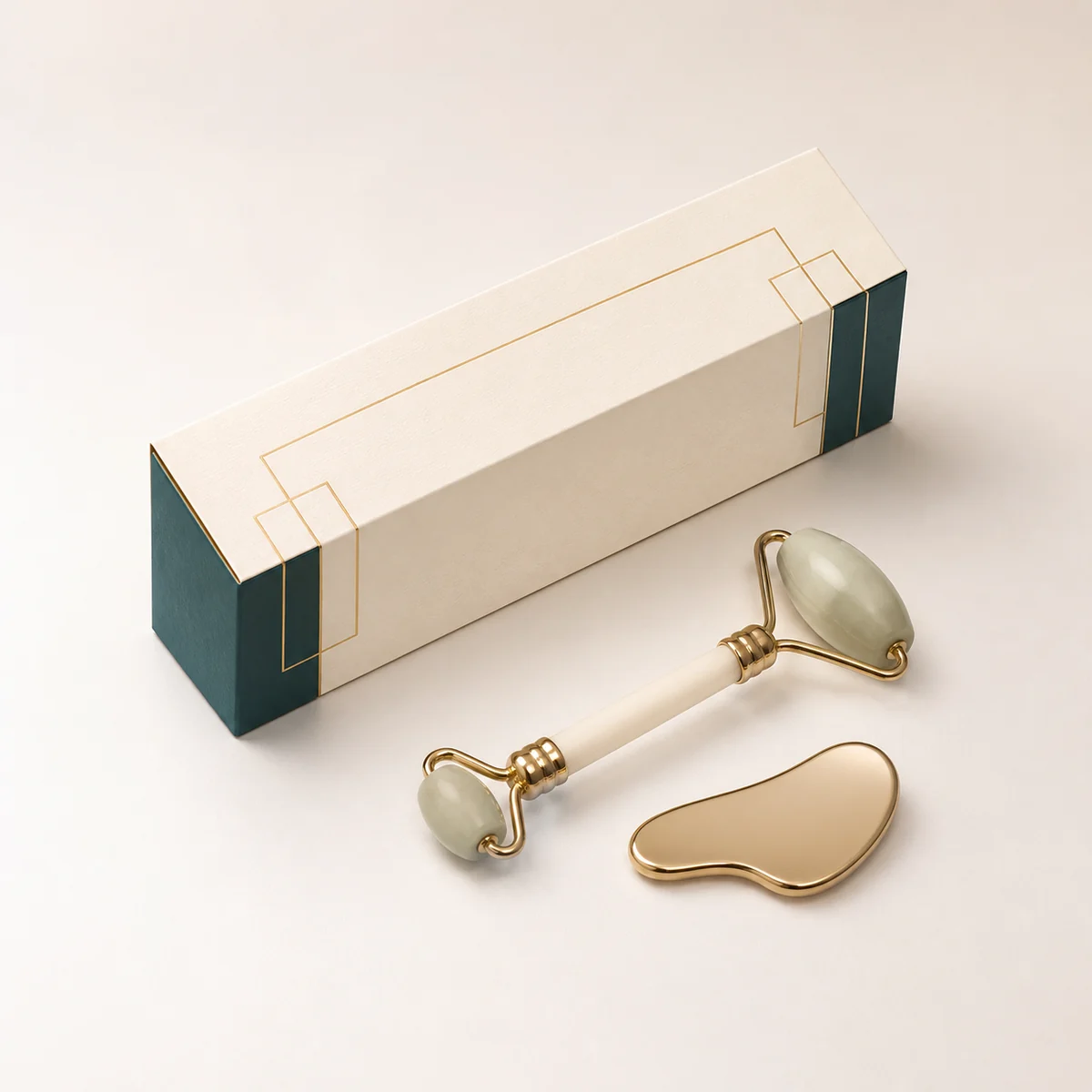
Box Style: Tuck-End Boxes

Efficient carton structures with clean tuck closures for product-specific packaging.

  • Custom Beauty Tool Boxes

    Custom Beauty Tool Boxes

    Custom Beauty Tool Boxes are custom cartons planned around the dimensions, protection needs, artwork, and retail presentation of a beauty tool product. Package tools and accessories with protective fit and clear product display. PearlFold uses the product brief and physical measurements to define an appropriate structure before a quote is finalized, so the package is based on the actual primary product container rather than a generic stock assumption.

    Reviewed August 2026: this page describes a custom-quote packaging service for U.S. beauty and personal-care brands. Final size, board, insert, finish, order quantity, production schedule, and delivery terms must be confirmed in the written quotation. PearlFold does not present one unverified specification as suitable for every brand or product.

    What are custom beauty tool boxes used for?

    Custom Beauty Tool Boxes give the primary product container a structured outer package for presentation, information, handling, and protection. A well-planned carton creates a clear surface for brand artwork and required product copy while helping the inner item stay organized through packing, storage, and retail display. The right solution may be a size-matched folding carton or presentation box, but the final choice depends on the container profile, closure, weight, fragility, sales channel, and desired opening experience.

    The carton should support the product instead of competing with it. For a single retail unit, that usually means a clean silhouette, readable panel hierarchy, and controlled use of finishes. For a launch set, influencer kit, or premium assortment, the brief may call for more presentation space or a fitted insert. PearlFold evaluates those decisions as part of one packaging system so the structure, graphics, and unboxing sequence work together.

    How should a custom beauty tool box be sized?

    A custom beauty tool box should be sized from the finished product, not from a screen estimate. The quote brief should include the container’s height, width or diameter, depth, cap or closure profile, weight, and any parts that extend beyond the main body. If the product has a pump, dropper, wand, applicator, sleeve, or tamper feature, that detail can change the internal clearance and panel layout.

    PearlFold also considers how the product will enter and leave the carton. A snug fit can improve presentation, but a carton that is too tight may scuff the container or make packing difficult. Too much empty space can allow movement and make the package feel oversized. A prototype or production sample is the best way to confirm fit before a larger run. If an insert is needed, its opening, depth, finger access, and retention points should be evaluated with the actual product.

    Which box styles can work for beauty tool packaging?

    The appropriate structure depends on the product and the sales experience. Possible directions for this product family include folding cartons; tuck-end boxes; sleeves; window boxes. These are planning directions, not a promise that every style fits every container. A lightweight retail item may only need a folding carton, while a fragile glass component or coordinated set may justify an insert or a more presentation-led structure.

    • Straight or reverse tuck cartons: efficient retail structures when the container has a stable, compact profile.
    • Auto-bottom or reinforced folding cartons: worth evaluating when weight or packing speed calls for more base support.
    • Sleeves and trays: useful when the product should reveal in stages or when a coordinated inner tray improves presentation.
    • Fitted presentation boxes: suited to selected sets, gifting, PR mailers, or premium programs after cost and shipping impact are reviewed.

    What materials and finishes should a U.S. beauty brand consider?

    Material selection starts with structure, print surface, protection, and the brand’s documented requirements. Relevant directions may include paperboard; kraft; rigid board for sets. The final board grade and thickness should be selected after the dimensions, weight, and converting method are known. Sustainability language should only be used when the chosen material, supplier documentation, and disposal pathway support the exact claim.

    Finishes can guide attention without covering every panel. Matte or gloss coatings, spot treatments, embossing, debossing, foil details, and textured papers may be evaluated against the artwork and budget. Fine type, barcodes, ingredient copy, and regulatory information need enough contrast and quiet space. A finish that looks strong in a digital mockup should still be tested for rub resistance, fold cracking, legibility, and color behavior on the selected board.

    How should artwork be organized on Custom Beauty Tool Boxes?

    Artwork should follow the approved dieline and keep critical elements away from folds, glue areas, cut lines, and closure panels. The principal display panel normally carries the clearest brand and product identification. Secondary panels can organize directions, ingredient or legal copy supplied by the brand, quantity statements, barcodes, recycling guidance that can be substantiated, and other market-specific information.

    For U.S. distribution, the brand remains responsible for confirming the copy and labeling rules that apply to its product. PearlFold can organize the packaging production file around supplied content, but packaging design does not replace legal or regulatory review. Before release, check spelling, shade or variant names, barcode accuracy, color references, image resolution, overprint settings, and the relationship between every panel and the physical opening direction.

    Custom packaging or a stock carton: which is the better fit?

    Decision factor Custom Beauty Tool packaging Stock carton
    Fit Planned around the supplied product dimensions and closure profile Limited to available standard sizes
    Artwork Built around an approved dieline and brand panel hierarchy May rely on labels, sleeves, or restricted print areas
    Insert planning Can be evaluated with the actual container and presentation goal Usually requires a separate workaround
    Best use Retail launches, repeat product lines, sets, and brand-led presentation Early samples or situations where speed and existing size matter more than fit

    Custom packaging is worth considering when fit, shelf identity, panel space, or a controlled unboxing sequence affects the sale. A stock carton can still be practical for early testing. The useful comparison is not “custom is always better.” The decision should account for product readiness, artwork status, quantity, budget, schedule, shipping method, and the cost of poor fit.

    What information is needed for an accurate custom packaging quote?

    A clear brief reduces revisions and makes options easier to compare. Send the product dimensions, product weight, container photographs, desired quantity range, target delivery location, preferred structure, artwork status, finish direction, insert requirement, and target timing. If the product is still in development, identify which measurements are final and which may change.

    • Finished primary product container dimensions and closure details
    • Desired number of units and any planned product variants
    • Retail, e-commerce, subscription, gifting, or launch-kit use
    • Print files, color references, and required information panels
    • Protection, insert, assembly, packing, and shipping considerations

    PearlFold can then discuss a packaging direction and prepare a project-specific quotation. Related packaging pages that may help with range planning include Custom Cosmetic Brush Boxes, Custom Lipstick Boxes, and Custom Lip Gloss Boxes. Each related product should still receive its own measurements and packaging brief.

    Frequently asked questions about Custom Beauty Tool Boxes

    Can the carton be matched to an existing product container?

    Yes, the design process can begin from an existing container’s finished dimensions and photographs. A physical sample or prototype is recommended when small tolerances, unusual closures, glass weight, or an insert affect fit. Final compatibility should be approved before the production quantity is released.

    Can one design system cover several shades or variants?

    A shared structure can often support a coordinated range when the containers use the same dimensions. Artwork files can then organize shade, scent, formula, or size differences through a controlled visual system. Each SKU and barcode should be checked separately before production.

    Are premium finishes required?

    No. Strong typography, color control, board selection, and accurate construction can create a premium result without applying every decorative process. Use a finish when it supports hierarchy, touch, durability, or brand recognition, and confirm its behavior on the chosen material.

    How do I start a custom beauty tool boxes project?

    Start with the product dimensions, quantity range, delivery location, artwork status, and a short description of the desired presentation. Use the Get a Custom Quote pathway to share those details. PearlFold can review the brief and identify the next structural, artwork, sampling, and quotation decisions.
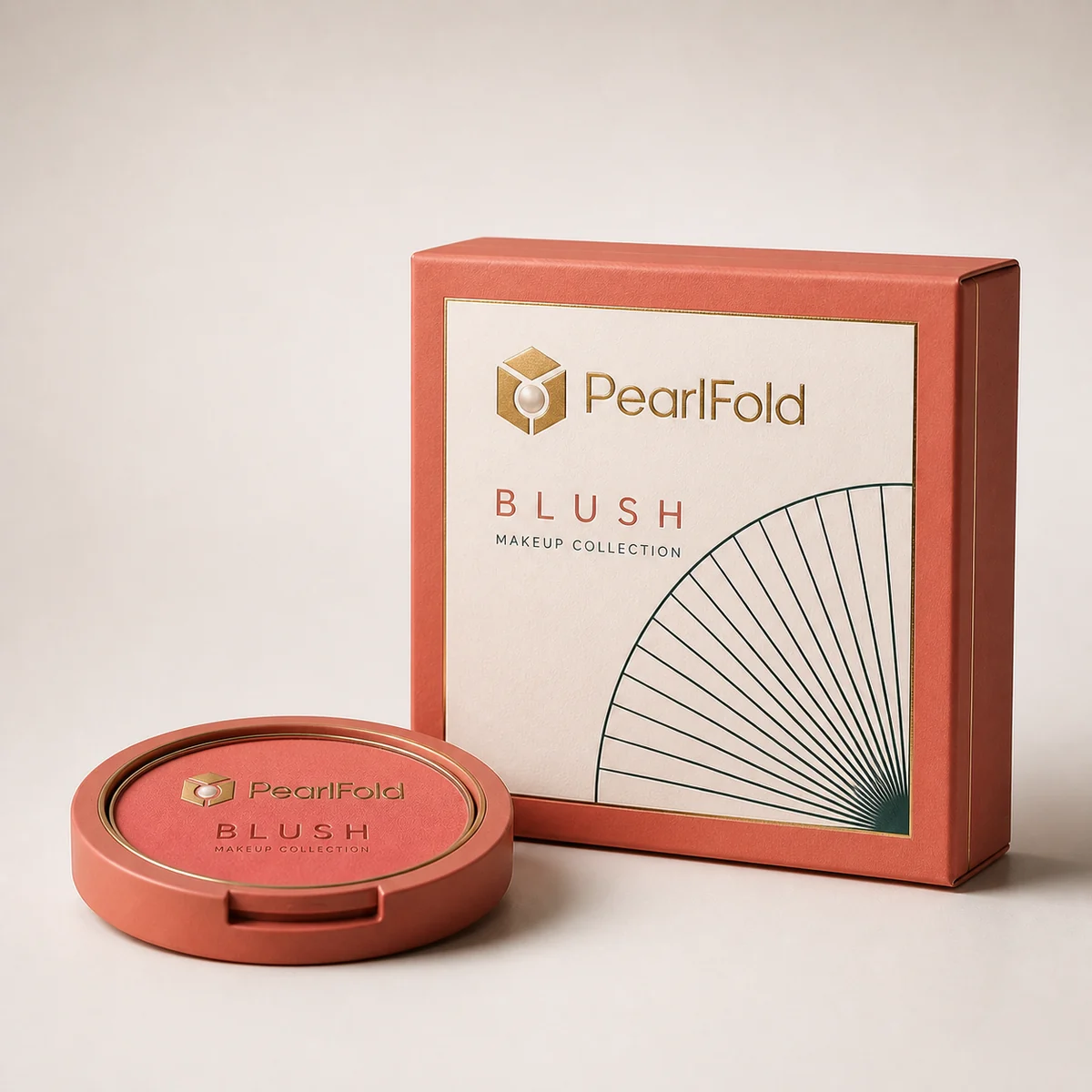
  • Custom Blush Boxes

    Custom Blush Boxes

    Custom Blush Boxes are custom cartons planned around the dimensions, protection needs, artwork, and retail presentation of a blush product. Support compact and bottle formats with coordinated cosmetic presentation. PearlFold uses the product brief and physical measurements to define an appropriate structure before a quote is finalized, so the package is based on the actual compact rather than a generic stock assumption.

    Reviewed August 2026: this page describes a custom-quote packaging service for U.S. beauty and personal-care brands. Final size, board, insert, finish, order quantity, production schedule, and delivery terms must be confirmed in the written quotation. PearlFold does not present one unverified specification as suitable for every brand or product.

    What are custom blush boxes used for?

    Custom Blush Boxes give the compact a structured outer package for presentation, information, handling, and protection. A well-planned carton creates a clear surface for brand artwork and required product copy while helping the inner item stay organized through packing, storage, and retail display. The right solution may be a shallow folding carton, but the final choice depends on the container profile, closure, weight, fragility, sales channel, and desired opening experience.

    The carton should support the product instead of competing with it. For a single retail unit, that usually means a clean silhouette, readable panel hierarchy, and controlled use of finishes. For a launch set, influencer kit, or premium assortment, the brief may call for more presentation space or a fitted insert. PearlFold evaluates those decisions as part of one packaging system so the structure, graphics, and unboxing sequence work together.

    How should a custom blush box be sized?

    A custom blush box should be sized from the finished product, not from a screen estimate. The quote brief should include the container’s height, width or diameter, depth, cap or closure profile, weight, and any parts that extend beyond the main body. If the product has a pump, dropper, wand, applicator, sleeve, or tamper feature, that detail can change the internal clearance and panel layout.

    PearlFold also considers how the product will enter and leave the carton. A snug fit can improve presentation, but a carton that is too tight may scuff the container or make packing difficult. Too much empty space can allow movement and make the package feel oversized. A prototype or production sample is the best way to confirm fit before a larger run. If an insert is needed, its opening, depth, finger access, and retention points should be evaluated with the actual product.

    Which box styles can work for blush packaging?

    The appropriate structure depends on the product and the sales experience. Possible directions for this product family include folding cartons; tuck-end boxes; sleeves; window boxes. These are planning directions, not a promise that every style fits every container. A lightweight retail item may only need a folding carton, while a fragile glass component or coordinated set may justify an insert or a more presentation-led structure.

    • Straight or reverse tuck cartons: efficient retail structures when the container has a stable, compact profile.
    • Auto-bottom or reinforced folding cartons: worth evaluating when weight or packing speed calls for more base support.
    • Sleeves and trays: useful when the product should reveal in stages or when a coordinated inner tray improves presentation.
    • Fitted presentation boxes: suited to selected sets, gifting, PR mailers, or premium programs after cost and shipping impact are reviewed.

    What materials and finishes should a U.S. beauty brand consider?

    Material selection starts with structure, print surface, protection, and the brand’s documented requirements. Relevant directions may include paperboard; kraft; rigid board for sets. The final board grade and thickness should be selected after the dimensions, weight, and converting method are known. Sustainability language should only be used when the chosen material, supplier documentation, and disposal pathway support the exact claim.

    Finishes can guide attention without covering every panel. Matte or gloss coatings, spot treatments, embossing, debossing, foil details, and textured papers may be evaluated against the artwork and budget. Fine type, barcodes, ingredient copy, and regulatory information need enough contrast and quiet space. A finish that looks strong in a digital mockup should still be tested for rub resistance, fold cracking, legibility, and color behavior on the selected board.

    How should artwork be organized on Custom Blush Boxes?

    Artwork should follow the approved dieline and keep critical elements away from folds, glue areas, cut lines, and closure panels. The principal display panel normally carries the clearest brand and product identification. Secondary panels can organize directions, ingredient or legal copy supplied by the brand, quantity statements, barcodes, recycling guidance that can be substantiated, and other market-specific information.

    For U.S. distribution, the brand remains responsible for confirming the copy and labeling rules that apply to its product. PearlFold can organize the packaging production file around supplied content, but packaging design does not replace legal or regulatory review. Before release, check spelling, shade or variant names, barcode accuracy, color references, image resolution, overprint settings, and the relationship between every panel and the physical opening direction.

    Custom packaging or a stock carton: which is the better fit?

    Decision factor Custom Blush packaging Stock carton
    Fit Planned around the supplied product dimensions and closure profile Limited to available standard sizes
    Artwork Built around an approved dieline and brand panel hierarchy May rely on labels, sleeves, or restricted print areas
    Insert planning Can be evaluated with the actual container and presentation goal Usually requires a separate workaround
    Best use Retail launches, repeat product lines, sets, and brand-led presentation Early samples or situations where speed and existing size matter more than fit

    Custom packaging is worth considering when fit, shelf identity, panel space, or a controlled unboxing sequence affects the sale. A stock carton can still be practical for early testing. The useful comparison is not “custom is always better.” The decision should account for product readiness, artwork status, quantity, budget, schedule, shipping method, and the cost of poor fit.

    What information is needed for an accurate custom packaging quote?

    A clear brief reduces revisions and makes options easier to compare. Send the product dimensions, product weight, container photographs, desired quantity range, target delivery location, preferred structure, artwork status, finish direction, insert requirement, and target timing. If the product is still in development, identify which measurements are final and which may change.

    • Finished compact dimensions and closure details
    • Desired number of units and any planned product variants
    • Retail, e-commerce, subscription, gifting, or launch-kit use
    • Print files, color references, and required information panels
    • Protection, insert, assembly, packing, and shipping considerations

    PearlFold can then discuss a packaging direction and prepare a project-specific quotation. Related packaging pages that may help with range planning include Custom Bronzer Boxes, Custom Highlighter Boxes, and Custom Contour Boxes. Each related product should still receive its own measurements and packaging brief.

    Frequently asked questions about Custom Blush Boxes

    Can the carton be matched to an existing product container?

    Yes, the design process can begin from an existing container’s finished dimensions and photographs. A physical sample or prototype is recommended when small tolerances, unusual closures, glass weight, or an insert affect fit. Final compatibility should be approved before the production quantity is released.

    Can one design system cover several shades or variants?

    A shared structure can often support a coordinated range when the containers use the same dimensions. Artwork files can then organize shade, scent, formula, or size differences through a controlled visual system. Each SKU and barcode should be checked separately before production.

    Are premium finishes required?

    No. Strong typography, color control, board selection, and accurate construction can create a premium result without applying every decorative process. Use a finish when it supports hierarchy, touch, durability, or brand recognition, and confirm its behavior on the chosen material.

    How do I start a custom blush boxes project?

    Start with the product dimensions, quantity range, delivery location, artwork status, and a short description of the desired presentation. Use the Get a Custom Quote pathway to share those details. PearlFold can review the brief and identify the next structural, artwork, sampling, and quotation decisions.
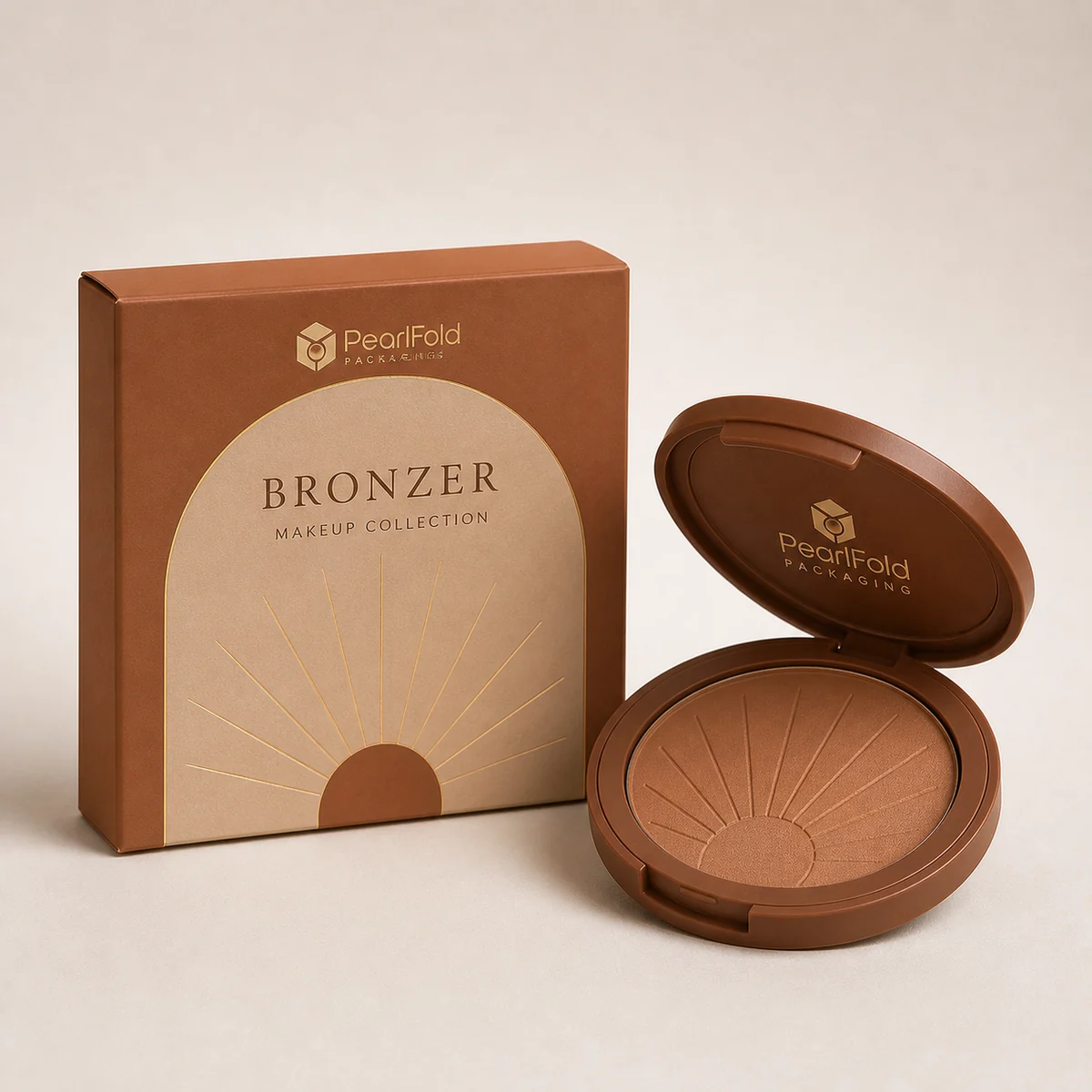
  • Custom Bronzer Boxes

    Custom Bronzer Boxes

    Custom Bronzer Boxes are custom cartons planned around the dimensions, protection needs, artwork, and retail presentation of a bronzer product. Protect bronzer formats while keeping shade and finish variants easy to identify. PearlFold uses the product brief and physical measurements to define an appropriate structure before a quote is finalized, so the package is based on the actual compact rather than a generic stock assumption.

    Reviewed August 2026: this page describes a custom-quote packaging service for U.S. beauty and personal-care brands. Final size, board, insert, finish, order quantity, production schedule, and delivery terms must be confirmed in the written quotation. PearlFold does not present one unverified specification as suitable for every brand or product.

    What are custom bronzer boxes used for?

    Custom Bronzer Boxes give the compact a structured outer package for presentation, information, handling, and protection. A well-planned carton creates a clear surface for brand artwork and required product copy while helping the inner item stay organized through packing, storage, and retail display. The right solution may be a shallow folding carton, but the final choice depends on the container profile, closure, weight, fragility, sales channel, and desired opening experience.

    The carton should support the product instead of competing with it. For a single retail unit, that usually means a clean silhouette, readable panel hierarchy, and controlled use of finishes. For a launch set, influencer kit, or premium assortment, the brief may call for more presentation space or a fitted insert. PearlFold evaluates those decisions as part of one packaging system so the structure, graphics, and unboxing sequence work together.

    How should a custom bronzer box be sized?

    A custom bronzer box should be sized from the finished product, not from a screen estimate. The quote brief should include the container’s height, width or diameter, depth, cap or closure profile, weight, and any parts that extend beyond the main body. If the product has a pump, dropper, wand, applicator, sleeve, or tamper feature, that detail can change the internal clearance and panel layout.

    PearlFold also considers how the product will enter and leave the carton. A snug fit can improve presentation, but a carton that is too tight may scuff the container or make packing difficult. Too much empty space can allow movement and make the package feel oversized. A prototype or production sample is the best way to confirm fit before a larger run. If an insert is needed, its opening, depth, finger access, and retention points should be evaluated with the actual product.

    Which box styles can work for bronzer packaging?

    The appropriate structure depends on the product and the sales experience. Possible directions for this product family include folding cartons; tuck-end boxes; sleeves; window boxes. These are planning directions, not a promise that every style fits every container. A lightweight retail item may only need a folding carton, while a fragile glass component or coordinated set may justify an insert or a more presentation-led structure.

    • Straight or reverse tuck cartons: efficient retail structures when the container has a stable, compact profile.
    • Auto-bottom or reinforced folding cartons: worth evaluating when weight or packing speed calls for more base support.
    • Sleeves and trays: useful when the product should reveal in stages or when a coordinated inner tray improves presentation.
    • Fitted presentation boxes: suited to selected sets, gifting, PR mailers, or premium programs after cost and shipping impact are reviewed.

    What materials and finishes should a U.S. beauty brand consider?

    Material selection starts with structure, print surface, protection, and the brand’s documented requirements. Relevant directions may include paperboard; kraft; rigid board for sets. The final board grade and thickness should be selected after the dimensions, weight, and converting method are known. Sustainability language should only be used when the chosen material, supplier documentation, and disposal pathway support the exact claim.

    Finishes can guide attention without covering every panel. Matte or gloss coatings, spot treatments, embossing, debossing, foil details, and textured papers may be evaluated against the artwork and budget. Fine type, barcodes, ingredient copy, and regulatory information need enough contrast and quiet space. A finish that looks strong in a digital mockup should still be tested for rub resistance, fold cracking, legibility, and color behavior on the selected board.

    How should artwork be organized on Custom Bronzer Boxes?

    Artwork should follow the approved dieline and keep critical elements away from folds, glue areas, cut lines, and closure panels. The principal display panel normally carries the clearest brand and product identification. Secondary panels can organize directions, ingredient or legal copy supplied by the brand, quantity statements, barcodes, recycling guidance that can be substantiated, and other market-specific information.

    For U.S. distribution, the brand remains responsible for confirming the copy and labeling rules that apply to its product. PearlFold can organize the packaging production file around supplied content, but packaging design does not replace legal or regulatory review. Before release, check spelling, shade or variant names, barcode accuracy, color references, image resolution, overprint settings, and the relationship between every panel and the physical opening direction.

    Custom packaging or a stock carton: which is the better fit?

    Decision factor Custom Bronzer packaging Stock carton
    Fit Planned around the supplied product dimensions and closure profile Limited to available standard sizes
    Artwork Built around an approved dieline and brand panel hierarchy May rely on labels, sleeves, or restricted print areas
    Insert planning Can be evaluated with the actual container and presentation goal Usually requires a separate workaround
    Best use Retail launches, repeat product lines, sets, and brand-led presentation Early samples or situations where speed and existing size matter more than fit

    Custom packaging is worth considering when fit, shelf identity, panel space, or a controlled unboxing sequence affects the sale. A stock carton can still be practical for early testing. The useful comparison is not “custom is always better.” The decision should account for product readiness, artwork status, quantity, budget, schedule, shipping method, and the cost of poor fit.

    What information is needed for an accurate custom packaging quote?

    A clear brief reduces revisions and makes options easier to compare. Send the product dimensions, product weight, container photographs, desired quantity range, target delivery location, preferred structure, artwork status, finish direction, insert requirement, and target timing. If the product is still in development, identify which measurements are final and which may change.

    • Finished compact dimensions and closure details
    • Desired number of units and any planned product variants
    • Retail, e-commerce, subscription, gifting, or launch-kit use
    • Print files, color references, and required information panels
    • Protection, insert, assembly, packing, and shipping considerations

    PearlFold can then discuss a packaging direction and prepare a project-specific quotation. Related packaging pages that may help with range planning include Custom Highlighter Boxes, Custom Contour Boxes, and Custom Setting Powder Boxes. Each related product should still receive its own measurements and packaging brief.

    Frequently asked questions about Custom Bronzer Boxes

    Can the carton be matched to an existing product container?

    Yes, the design process can begin from an existing container’s finished dimensions and photographs. A physical sample or prototype is recommended when small tolerances, unusual closures, glass weight, or an insert affect fit. Final compatibility should be approved before the production quantity is released.

    Can one design system cover several shades or variants?

    A shared structure can often support a coordinated range when the containers use the same dimensions. Artwork files can then organize shade, scent, formula, or size differences through a controlled visual system. Each SKU and barcode should be checked separately before production.

    Are premium finishes required?

    No. Strong typography, color control, board selection, and accurate construction can create a premium result without applying every decorative process. Use a finish when it supports hierarchy, touch, durability, or brand recognition, and confirm its behavior on the chosen material.

    How do I start a custom bronzer boxes project?

    Start with the product dimensions, quantity range, delivery location, artwork status, and a short description of the desired presentation. Use the Get a Custom Quote pathway to share those details. PearlFold can review the brief and identify the next structural, artwork, sampling, and quotation decisions.
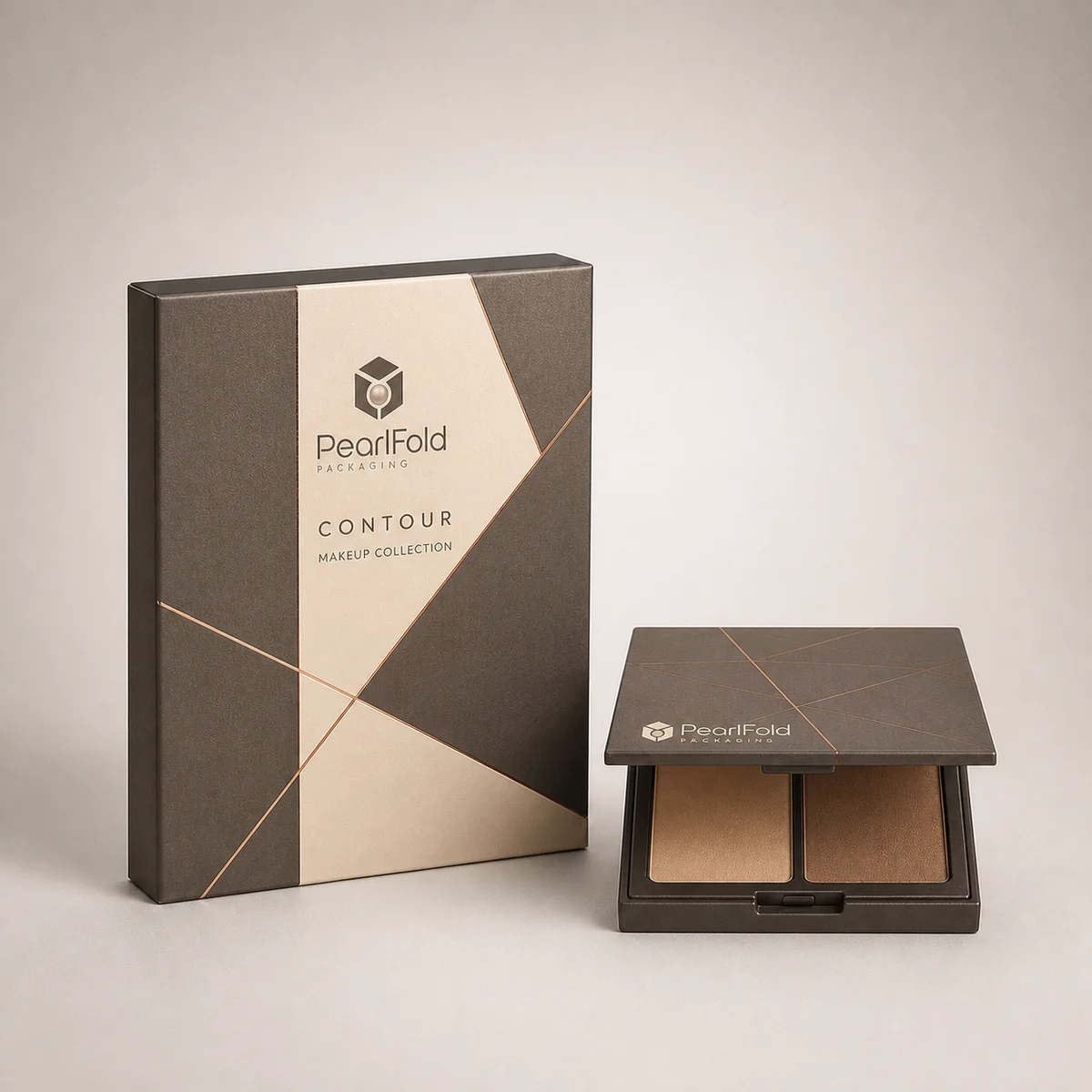
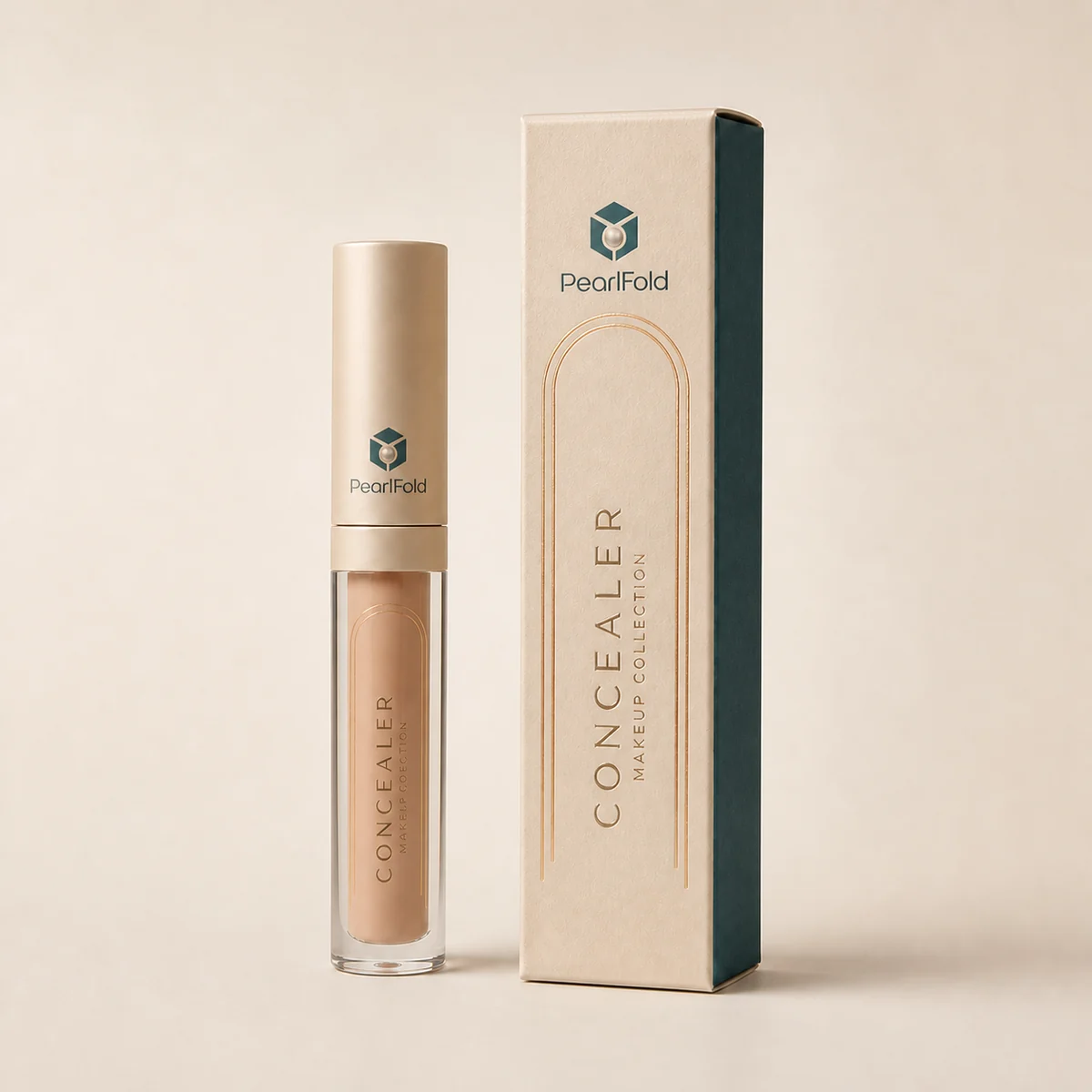
  • Custom Concealer Boxes

    Custom Concealer Boxes

    Custom Concealer Boxes are custom cartons planned around the dimensions, protection needs, artwork, and retail presentation of a concealer product. Package concealers in compact cartons suited to multiple applicator formats. PearlFold uses the product brief and physical measurements to define an appropriate structure before a quote is finalized, so the package is based on the actual bottle, pump, or dropper container rather than a generic stock assumption.

    Reviewed August 2026: this page describes a custom-quote packaging service for U.S. beauty and personal-care brands. Final size, board, insert, finish, order quantity, production schedule, and delivery terms must be confirmed in the written quotation. PearlFold does not present one unverified specification as suitable for every brand or product.

    What are custom concealer boxes used for?

    Custom Concealer Boxes give the bottle, pump, or dropper container a structured outer package for presentation, information, handling, and protection. A well-planned carton creates a clear surface for brand artwork and required product copy while helping the inner item stay organized through packing, storage, and retail display. The right solution may be a size-matched folding carton, but the final choice depends on the container profile, closure, weight, fragility, sales channel, and desired opening experience.

    The carton should support the product instead of competing with it. For a single retail unit, that usually means a clean silhouette, readable panel hierarchy, and controlled use of finishes. For a launch set, influencer kit, or premium assortment, the brief may call for more presentation space or a fitted insert. PearlFold evaluates those decisions as part of one packaging system so the structure, graphics, and unboxing sequence work together.

    How should a custom concealer box be sized?

    A custom concealer box should be sized from the finished product, not from a screen estimate. The quote brief should include the container’s height, width or diameter, depth, cap or closure profile, weight, and any parts that extend beyond the main body. If the product has a pump, dropper, wand, applicator, sleeve, or tamper feature, that detail can change the internal clearance and panel layout.

    PearlFold also considers how the product will enter and leave the carton. A snug fit can improve presentation, but a carton that is too tight may scuff the container or make packing difficult. Too much empty space can allow movement and make the package feel oversized. A prototype or production sample is the best way to confirm fit before a larger run. If an insert is needed, its opening, depth, finger access, and retention points should be evaluated with the actual product.

    Which box styles can work for concealer packaging?

    The appropriate structure depends on the product and the sales experience. Possible directions for this product family include folding cartons; tuck-end boxes; sleeves; window boxes. These are planning directions, not a promise that every style fits every container. A lightweight retail item may only need a folding carton, while a fragile glass component or coordinated set may justify an insert or a more presentation-led structure.

    • Straight or reverse tuck cartons: efficient retail structures when the container has a stable, compact profile.
    • Auto-bottom or reinforced folding cartons: worth evaluating when weight or packing speed calls for more base support.
    • Sleeves and trays: useful when the product should reveal in stages or when a coordinated inner tray improves presentation.
    • Fitted presentation boxes: suited to selected sets, gifting, PR mailers, or premium programs after cost and shipping impact are reviewed.

    What materials and finishes should a U.S. beauty brand consider?

    Material selection starts with structure, print surface, protection, and the brand’s documented requirements. Relevant directions may include paperboard; kraft; rigid board for sets. The final board grade and thickness should be selected after the dimensions, weight, and converting method are known. Sustainability language should only be used when the chosen material, supplier documentation, and disposal pathway support the exact claim.

    Finishes can guide attention without covering every panel. Matte or gloss coatings, spot treatments, embossing, debossing, foil details, and textured papers may be evaluated against the artwork and budget. Fine type, barcodes, ingredient copy, and regulatory information need enough contrast and quiet space. A finish that looks strong in a digital mockup should still be tested for rub resistance, fold cracking, legibility, and color behavior on the selected board.

    How should artwork be organized on Custom Concealer Boxes?

    Artwork should follow the approved dieline and keep critical elements away from folds, glue areas, cut lines, and closure panels. The principal display panel normally carries the clearest brand and product identification. Secondary panels can organize directions, ingredient or legal copy supplied by the brand, quantity statements, barcodes, recycling guidance that can be substantiated, and other market-specific information.

    For U.S. distribution, the brand remains responsible for confirming the copy and labeling rules that apply to its product. PearlFold can organize the packaging production file around supplied content, but packaging design does not replace legal or regulatory review. Before release, check spelling, shade or variant names, barcode accuracy, color references, image resolution, overprint settings, and the relationship between every panel and the physical opening direction.

    Custom packaging or a stock carton: which is the better fit?

    Decision factor Custom Concealer packaging Stock carton
    Fit Planned around the supplied product dimensions and closure profile Limited to available standard sizes
    Artwork Built around an approved dieline and brand panel hierarchy May rely on labels, sleeves, or restricted print areas
    Insert planning Can be evaluated with the actual container and presentation goal Usually requires a separate workaround
    Best use Retail launches, repeat product lines, sets, and brand-led presentation Early samples or situations where speed and existing size matter more than fit

    Custom packaging is worth considering when fit, shelf identity, panel space, or a controlled unboxing sequence affects the sale. A stock carton can still be practical for early testing. The useful comparison is not “custom is always better.” The decision should account for product readiness, artwork status, quantity, budget, schedule, shipping method, and the cost of poor fit.

    What information is needed for an accurate custom packaging quote?

    A clear brief reduces revisions and makes options easier to compare. Send the product dimensions, product weight, container photographs, desired quantity range, target delivery location, preferred structure, artwork status, finish direction, insert requirement, and target timing. If the product is still in development, identify which measurements are final and which may change.

    • Finished bottle, pump, or dropper container dimensions and closure details
    • Desired number of units and any planned product variants
    • Retail, e-commerce, subscription, gifting, or launch-kit use
    • Print files, color references, and required information panels
    • Protection, insert, assembly, packing, and shipping considerations

    PearlFold can then discuss a packaging direction and prepare a project-specific quotation. Related packaging pages that may help with range planning include Custom Blush Boxes, Custom Bronzer Boxes, and Custom Highlighter Boxes. Each related product should still receive its own measurements and packaging brief.

    Frequently asked questions about Custom Concealer Boxes

    Can the carton be matched to an existing product container?

    Yes, the design process can begin from an existing container’s finished dimensions and photographs. A physical sample or prototype is recommended when small tolerances, unusual closures, glass weight, or an insert affect fit. Final compatibility should be approved before the production quantity is released.

    Can one design system cover several shades or variants?

    A shared structure can often support a coordinated range when the containers use the same dimensions. Artwork files can then organize shade, scent, formula, or size differences through a controlled visual system. Each SKU and barcode should be checked separately before production.

    Are premium finishes required?

    No. Strong typography, color control, board selection, and accurate construction can create a premium result without applying every decorative process. Use a finish when it supports hierarchy, touch, durability, or brand recognition, and confirm its behavior on the chosen material.

    How do I start a custom concealer boxes project?

    Start with the product dimensions, quantity range, delivery location, artwork status, and a short description of the desired presentation. Use the Get a Custom Quote pathway to share those details. PearlFold can review the brief and identify the next structural, artwork, sampling, and quotation decisions.
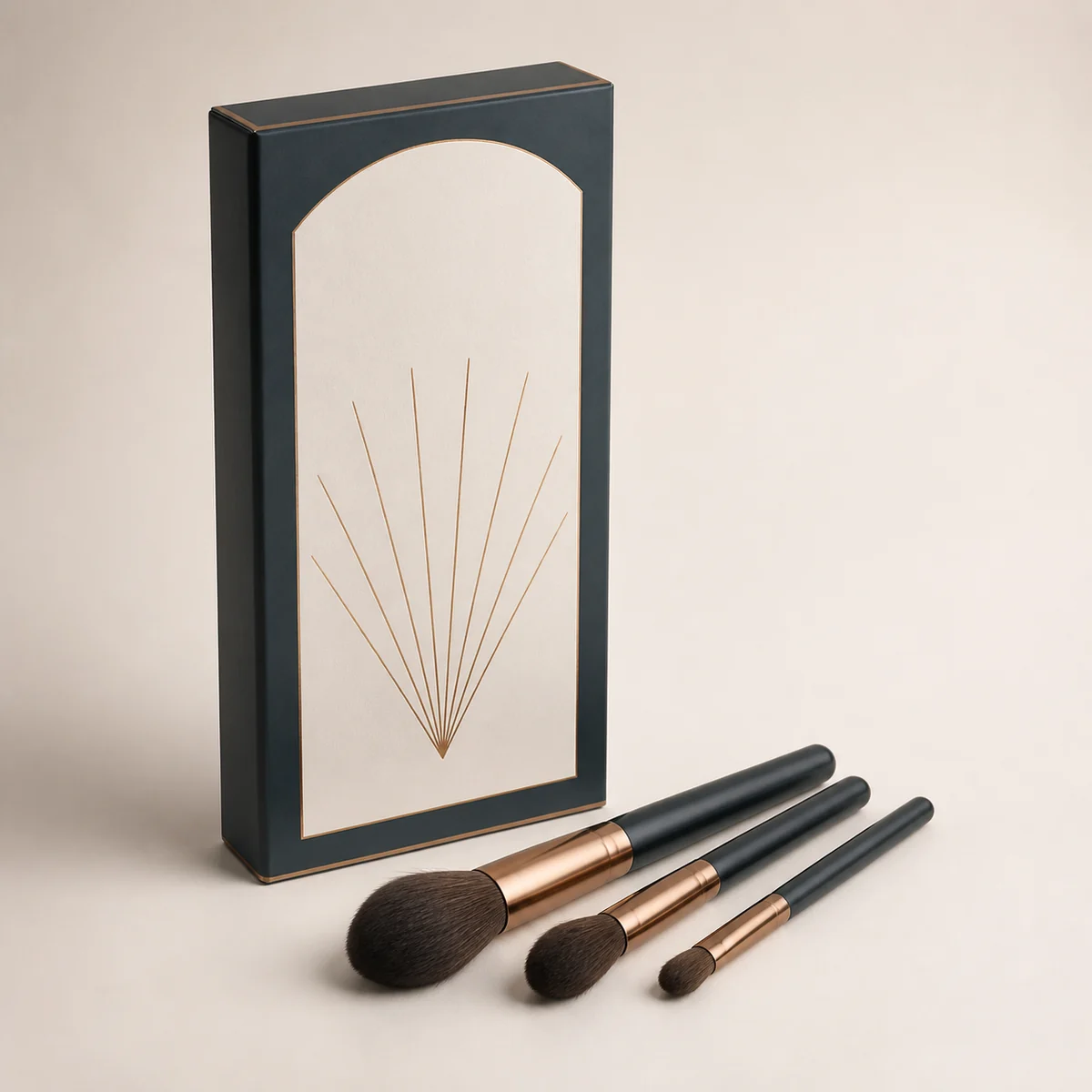
  • Custom Contour Boxes

    Custom Contour Boxes

    Custom Contour Boxes are custom cartons planned around the dimensions, protection needs, artwork, and retail presentation of a contour product. Package contour products across single-item and palette formats. PearlFold uses the product brief and physical measurements to define an appropriate structure before a quote is finalized, so the package is based on the actual primary product container rather than a generic stock assumption.

    Reviewed August 2026: this page describes a custom-quote packaging service for U.S. beauty and personal-care brands. Final size, board, insert, finish, order quantity, production schedule, and delivery terms must be confirmed in the written quotation. PearlFold does not present one unverified specification as suitable for every brand or product.

    What are custom contour boxes used for?

    Custom Contour Boxes give the primary product container a structured outer package for presentation, information, handling, and protection. A well-planned carton creates a clear surface for brand artwork and required product copy while helping the inner item stay organized through packing, storage, and retail display. The right solution may be a size-matched folding carton or presentation box, but the final choice depends on the container profile, closure, weight, fragility, sales channel, and desired opening experience.

    The carton should support the product instead of competing with it. For a single retail unit, that usually means a clean silhouette, readable panel hierarchy, and controlled use of finishes. For a launch set, influencer kit, or premium assortment, the brief may call for more presentation space or a fitted insert. PearlFold evaluates those decisions as part of one packaging system so the structure, graphics, and unboxing sequence work together.

    How should a custom contour box be sized?

    A custom contour box should be sized from the finished product, not from a screen estimate. The quote brief should include the container’s height, width or diameter, depth, cap or closure profile, weight, and any parts that extend beyond the main body. If the product has a pump, dropper, wand, applicator, sleeve, or tamper feature, that detail can change the internal clearance and panel layout.

    PearlFold also considers how the product will enter and leave the carton. A snug fit can improve presentation, but a carton that is too tight may scuff the container or make packing difficult. Too much empty space can allow movement and make the package feel oversized. A prototype or production sample is the best way to confirm fit before a larger run. If an insert is needed, its opening, depth, finger access, and retention points should be evaluated with the actual product.

    Which box styles can work for contour packaging?

    The appropriate structure depends on the product and the sales experience. Possible directions for this product family include folding cartons; tuck-end boxes; sleeves; window boxes. These are planning directions, not a promise that every style fits every container. A lightweight retail item may only need a folding carton, while a fragile glass component or coordinated set may justify an insert or a more presentation-led structure.

    • Straight or reverse tuck cartons: efficient retail structures when the container has a stable, compact profile.
    • Auto-bottom or reinforced folding cartons: worth evaluating when weight or packing speed calls for more base support.
    • Sleeves and trays: useful when the product should reveal in stages or when a coordinated inner tray improves presentation.
    • Fitted presentation boxes: suited to selected sets, gifting, PR mailers, or premium programs after cost and shipping impact are reviewed.

    What materials and finishes should a U.S. beauty brand consider?

    Material selection starts with structure, print surface, protection, and the brand’s documented requirements. Relevant directions may include paperboard; kraft; rigid board for sets. The final board grade and thickness should be selected after the dimensions, weight, and converting method are known. Sustainability language should only be used when the chosen material, supplier documentation, and disposal pathway support the exact claim.

    Finishes can guide attention without covering every panel. Matte or gloss coatings, spot treatments, embossing, debossing, foil details, and textured papers may be evaluated against the artwork and budget. Fine type, barcodes, ingredient copy, and regulatory information need enough contrast and quiet space. A finish that looks strong in a digital mockup should still be tested for rub resistance, fold cracking, legibility, and color behavior on the selected board.

    How should artwork be organized on Custom Contour Boxes?

    Artwork should follow the approved dieline and keep critical elements away from folds, glue areas, cut lines, and closure panels. The principal display panel normally carries the clearest brand and product identification. Secondary panels can organize directions, ingredient or legal copy supplied by the brand, quantity statements, barcodes, recycling guidance that can be substantiated, and other market-specific information.

    For U.S. distribution, the brand remains responsible for confirming the copy and labeling rules that apply to its product. PearlFold can organize the packaging production file around supplied content, but packaging design does not replace legal or regulatory review. Before release, check spelling, shade or variant names, barcode accuracy, color references, image resolution, overprint settings, and the relationship between every panel and the physical opening direction.

    Custom packaging or a stock carton: which is the better fit?

    Decision factor Custom Contour packaging Stock carton
    Fit Planned around the supplied product dimensions and closure profile Limited to available standard sizes
    Artwork Built around an approved dieline and brand panel hierarchy May rely on labels, sleeves, or restricted print areas
    Insert planning Can be evaluated with the actual container and presentation goal Usually requires a separate workaround
    Best use Retail launches, repeat product lines, sets, and brand-led presentation Early samples or situations where speed and existing size matter more than fit

    Custom packaging is worth considering when fit, shelf identity, panel space, or a controlled unboxing sequence affects the sale. A stock carton can still be practical for early testing. The useful comparison is not “custom is always better.” The decision should account for product readiness, artwork status, quantity, budget, schedule, shipping method, and the cost of poor fit.

    What information is needed for an accurate custom packaging quote?

    A clear brief reduces revisions and makes options easier to compare. Send the product dimensions, product weight, container photographs, desired quantity range, target delivery location, preferred structure, artwork status, finish direction, insert requirement, and target timing. If the product is still in development, identify which measurements are final and which may change.

    • Finished primary product container dimensions and closure details
    • Desired number of units and any planned product variants
    • Retail, e-commerce, subscription, gifting, or launch-kit use
    • Print files, color references, and required information panels
    • Protection, insert, assembly, packing, and shipping considerations

    PearlFold can then discuss a packaging direction and prepare a project-specific quotation. Related packaging pages that may help with range planning include Custom Setting Powder Boxes, Custom Primer Boxes, and Custom Makeup Remover Boxes. Each related product should still receive its own measurements and packaging brief.

    Frequently asked questions about Custom Contour Boxes

    Can the carton be matched to an existing product container?

    Yes, the design process can begin from an existing container’s finished dimensions and photographs. A physical sample or prototype is recommended when small tolerances, unusual closures, glass weight, or an insert affect fit. Final compatibility should be approved before the production quantity is released.

    Can one design system cover several shades or variants?

    A shared structure can often support a coordinated range when the containers use the same dimensions. Artwork files can then organize shade, scent, formula, or size differences through a controlled visual system. Each SKU and barcode should be checked separately before production.

    Are premium finishes required?

    No. Strong typography, color control, board selection, and accurate construction can create a premium result without applying every decorative process. Use a finish when it supports hierarchy, touch, durability, or brand recognition, and confirm its behavior on the chosen material.

    How do I start a custom contour boxes project?

    Start with the product dimensions, quantity range, delivery location, artwork status, and a short description of the desired presentation. Use the Get a Custom Quote pathway to share those details. PearlFold can review the brief and identify the next structural, artwork, sampling, and quotation decisions.
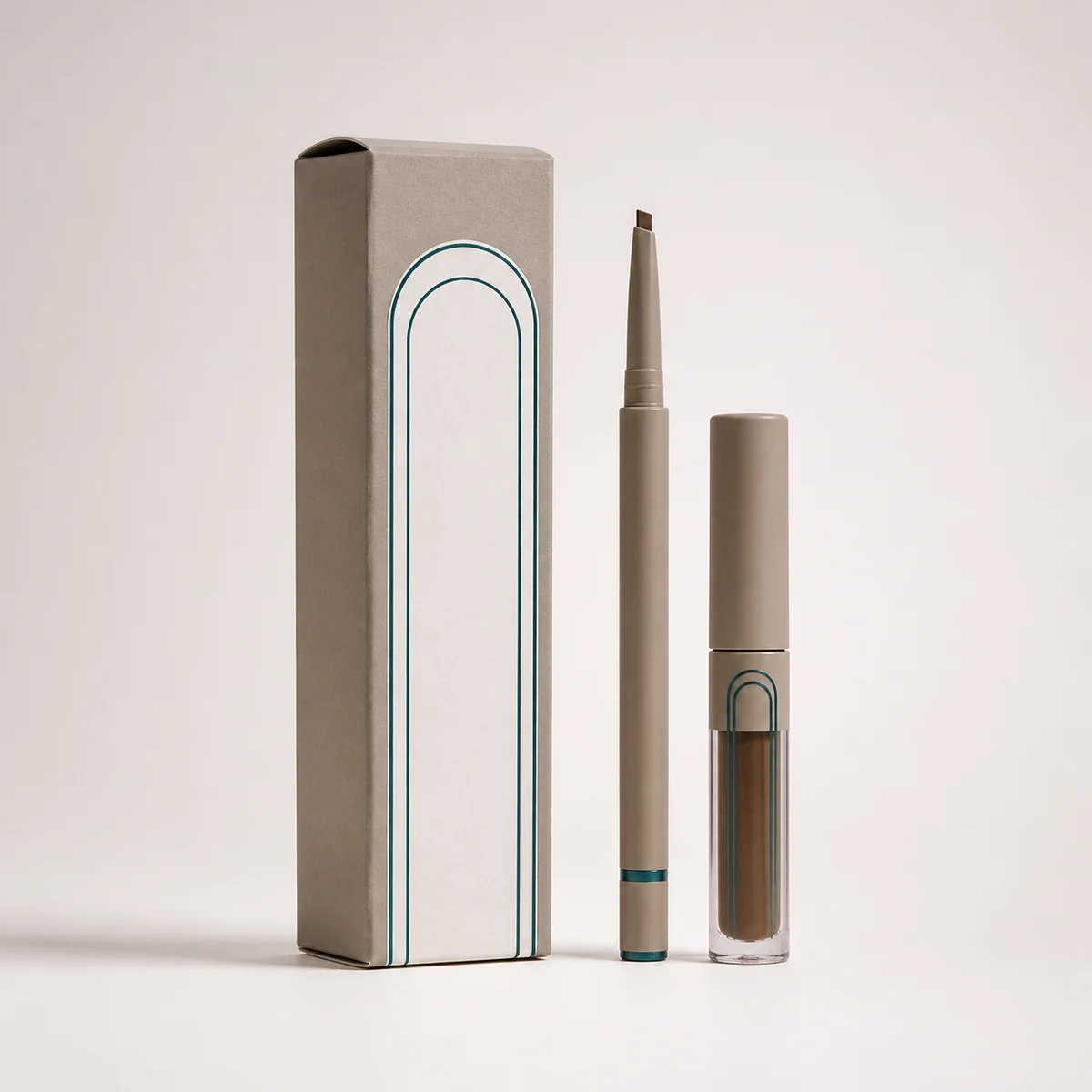
  • Custom Cosmetic Brush Boxes

    Custom Cosmetic Brush Boxes

    Custom Cosmetic Brush Boxes are custom cartons planned around the dimensions, protection needs, artwork, and retail presentation of a cosmetic brush product. Protect brush heads and handles with cartons or fitted set packaging. PearlFold uses the product brief and physical measurements to define an appropriate structure before a quote is finalized, so the package is based on the actual long-format product rather than a generic stock assumption.

    Reviewed August 2026: this page describes a custom-quote packaging service for U.S. beauty and personal-care brands. Final size, board, insert, finish, order quantity, production schedule, and delivery terms must be confirmed in the written quotation. PearlFold does not present one unverified specification as suitable for every brand or product.

    What are custom cosmetic brush boxes used for?

    Custom Cosmetic Brush Boxes give the long-format product a structured outer package for presentation, information, handling, and protection. A well-planned carton creates a clear surface for brand artwork and required product copy while helping the inner item stay organized through packing, storage, and retail display. The right solution may be a elongated folding carton or presentation box, but the final choice depends on the container profile, closure, weight, fragility, sales channel, and desired opening experience.

    The carton should support the product instead of competing with it. For a single retail unit, that usually means a clean silhouette, readable panel hierarchy, and controlled use of finishes. For a launch set, influencer kit, or premium assortment, the brief may call for more presentation space or a fitted insert. PearlFold evaluates those decisions as part of one packaging system so the structure, graphics, and unboxing sequence work together.

    How should a custom cosmetic brush box be sized?

    A custom cosmetic brush box should be sized from the finished product, not from a screen estimate. The quote brief should include the container’s height, width or diameter, depth, cap or closure profile, weight, and any parts that extend beyond the main body. If the product has a pump, dropper, wand, applicator, sleeve, or tamper feature, that detail can change the internal clearance and panel layout.

    PearlFold also considers how the product will enter and leave the carton. A snug fit can improve presentation, but a carton that is too tight may scuff the container or make packing difficult. Too much empty space can allow movement and make the package feel oversized. A prototype or production sample is the best way to confirm fit before a larger run. If an insert is needed, its opening, depth, finger access, and retention points should be evaluated with the actual product.

    Which box styles can work for cosmetic brush packaging?

    The appropriate structure depends on the product and the sales experience. Possible directions for this product family include folding cartons; tuck-end boxes; sleeves; window boxes. These are planning directions, not a promise that every style fits every container. A lightweight retail item may only need a folding carton, while a fragile glass component or coordinated set may justify an insert or a more presentation-led structure.

    • Straight or reverse tuck cartons: efficient retail structures when the container has a stable, compact profile.
    • Auto-bottom or reinforced folding cartons: worth evaluating when weight or packing speed calls for more base support.
    • Sleeves and trays: useful when the product should reveal in stages or when a coordinated inner tray improves presentation.
    • Fitted presentation boxes: suited to selected sets, gifting, PR mailers, or premium programs after cost and shipping impact are reviewed.

    What materials and finishes should a U.S. beauty brand consider?

    Material selection starts with structure, print surface, protection, and the brand’s documented requirements. Relevant directions may include paperboard; kraft; rigid board for sets. The final board grade and thickness should be selected after the dimensions, weight, and converting method are known. Sustainability language should only be used when the chosen material, supplier documentation, and disposal pathway support the exact claim.

    Finishes can guide attention without covering every panel. Matte or gloss coatings, spot treatments, embossing, debossing, foil details, and textured papers may be evaluated against the artwork and budget. Fine type, barcodes, ingredient copy, and regulatory information need enough contrast and quiet space. A finish that looks strong in a digital mockup should still be tested for rub resistance, fold cracking, legibility, and color behavior on the selected board.

    How should artwork be organized on Custom Cosmetic Brush Boxes?

    Artwork should follow the approved dieline and keep critical elements away from folds, glue areas, cut lines, and closure panels. The principal display panel normally carries the clearest brand and product identification. Secondary panels can organize directions, ingredient or legal copy supplied by the brand, quantity statements, barcodes, recycling guidance that can be substantiated, and other market-specific information.

    For U.S. distribution, the brand remains responsible for confirming the copy and labeling rules that apply to its product. PearlFold can organize the packaging production file around supplied content, but packaging design does not replace legal or regulatory review. Before release, check spelling, shade or variant names, barcode accuracy, color references, image resolution, overprint settings, and the relationship between every panel and the physical opening direction.

    Custom packaging or a stock carton: which is the better fit?

    Decision factor Custom Cosmetic Brush packaging Stock carton
    Fit Planned around the supplied product dimensions and closure profile Limited to available standard sizes
    Artwork Built around an approved dieline and brand panel hierarchy May rely on labels, sleeves, or restricted print areas
    Insert planning Can be evaluated with the actual container and presentation goal Usually requires a separate workaround
    Best use Retail launches, repeat product lines, sets, and brand-led presentation Early samples or situations where speed and existing size matter more than fit

    Custom packaging is worth considering when fit, shelf identity, panel space, or a controlled unboxing sequence affects the sale. A stock carton can still be practical for early testing. The useful comparison is not “custom is always better.” The decision should account for product readiness, artwork status, quantity, budget, schedule, shipping method, and the cost of poor fit.

    What information is needed for an accurate custom packaging quote?

    A clear brief reduces revisions and makes options easier to compare. Send the product dimensions, product weight, container photographs, desired quantity range, target delivery location, preferred structure, artwork status, finish direction, insert requirement, and target timing. If the product is still in development, identify which measurements are final and which may change.

    • Finished long-format product dimensions and closure details
    • Desired number of units and any planned product variants
    • Retail, e-commerce, subscription, gifting, or launch-kit use
    • Print files, color references, and required information panels
    • Protection, insert, assembly, packing, and shipping considerations

    PearlFold can then discuss a packaging direction and prepare a project-specific quotation. Related packaging pages that may help with range planning include Custom Lipstick Boxes, Custom Lip Gloss Boxes, and Custom Lip Balm Boxes. Each related product should still receive its own measurements and packaging brief.

    Frequently asked questions about Custom Cosmetic Brush Boxes

    Can the carton be matched to an existing product container?

    Yes, the design process can begin from an existing container’s finished dimensions and photographs. A physical sample or prototype is recommended when small tolerances, unusual closures, glass weight, or an insert affect fit. Final compatibility should be approved before the production quantity is released.

    Can one design system cover several shades or variants?

    A shared structure can often support a coordinated range when the containers use the same dimensions. Artwork files can then organize shade, scent, formula, or size differences through a controlled visual system. Each SKU and barcode should be checked separately before production.

    Are premium finishes required?

    No. Strong typography, color control, board selection, and accurate construction can create a premium result without applying every decorative process. Use a finish when it supports hierarchy, touch, durability, or brand recognition, and confirm its behavior on the chosen material.

    How do I start a custom cosmetic brush boxes project?

    Start with the product dimensions, quantity range, delivery location, artwork status, and a short description of the desired presentation. Use the Get a Custom Quote pathway to share those details. PearlFold can review the brief and identify the next structural, artwork, sampling, and quotation decisions.
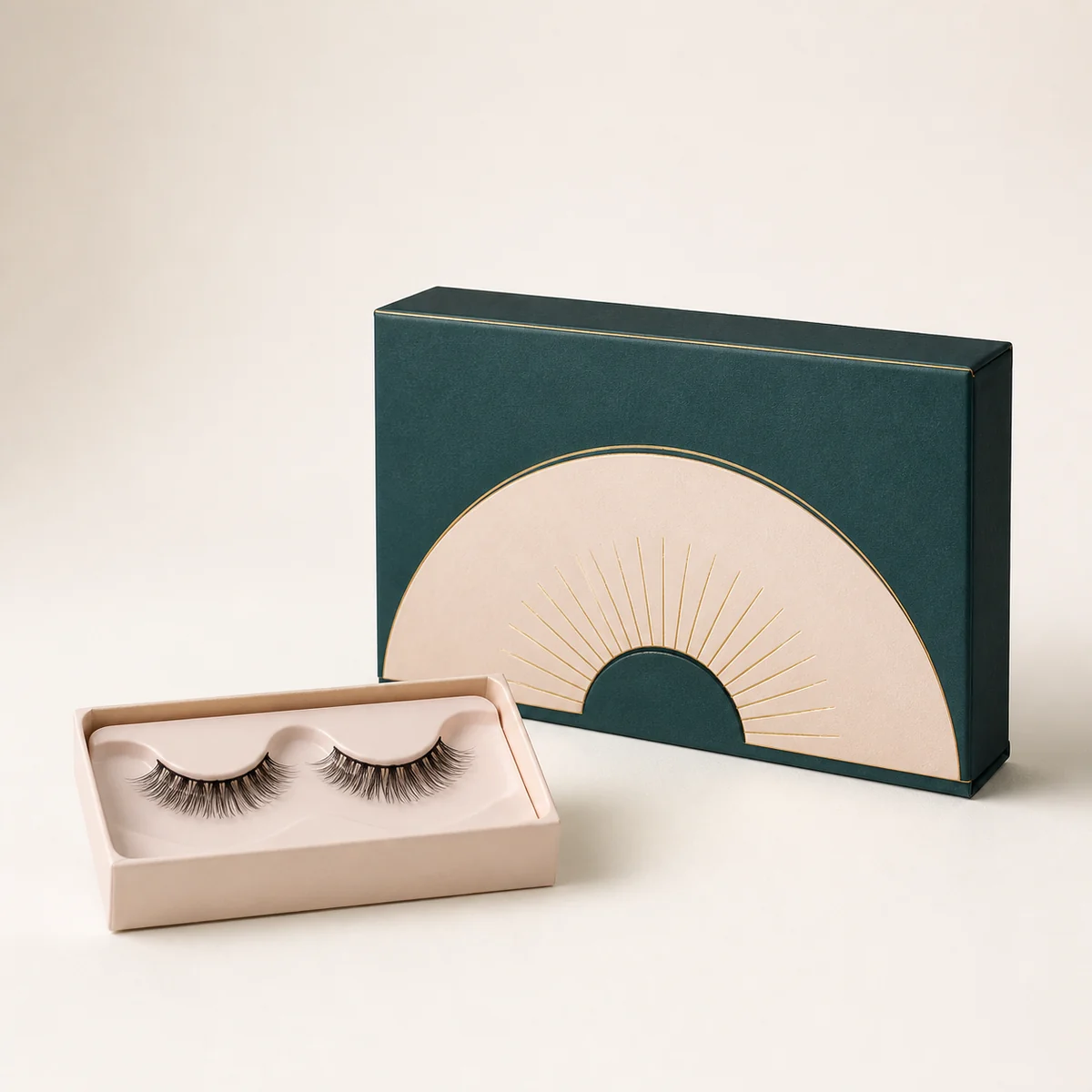
  • Custom Eyebrow Product Boxes

    Custom Eyebrow Product Boxes

    Custom Eyebrow Product Boxes are custom cartons planned around the dimensions, protection needs, artwork, and retail presentation of a eyebrow product product. Unify varied brow formats under a consistent packaging system. PearlFold uses the product brief and physical measurements to define an appropriate structure before a quote is finalized, so the package is based on the actual primary product container rather than a generic stock assumption.

    Reviewed August 2026: this page describes a custom-quote packaging service for U.S. beauty and personal-care brands. Final size, board, insert, finish, order quantity, production schedule, and delivery terms must be confirmed in the written quotation. PearlFold does not present one unverified specification as suitable for every brand or product.

    What are custom eyebrow product boxes used for?

    Custom Eyebrow Product Boxes give the primary product container a structured outer package for presentation, information, handling, and protection. A well-planned carton creates a clear surface for brand artwork and required product copy while helping the inner item stay organized through packing, storage, and retail display. The right solution may be a size-matched folding carton or presentation box, but the final choice depends on the container profile, closure, weight, fragility, sales channel, and desired opening experience.

    The carton should support the product instead of competing with it. For a single retail unit, that usually means a clean silhouette, readable panel hierarchy, and controlled use of finishes. For a launch set, influencer kit, or premium assortment, the brief may call for more presentation space or a fitted insert. PearlFold evaluates those decisions as part of one packaging system so the structure, graphics, and unboxing sequence work together.

    How should a custom eyebrow product box be sized?

    A custom eyebrow product box should be sized from the finished product, not from a screen estimate. The quote brief should include the container’s height, width or diameter, depth, cap or closure profile, weight, and any parts that extend beyond the main body. If the product has a pump, dropper, wand, applicator, sleeve, or tamper feature, that detail can change the internal clearance and panel layout.

    PearlFold also considers how the product will enter and leave the carton. A snug fit can improve presentation, but a carton that is too tight may scuff the container or make packing difficult. Too much empty space can allow movement and make the package feel oversized. A prototype or production sample is the best way to confirm fit before a larger run. If an insert is needed, its opening, depth, finger access, and retention points should be evaluated with the actual product.

    Which box styles can work for eyebrow product packaging?

    The appropriate structure depends on the product and the sales experience. Possible directions for this product family include folding cartons; tuck-end boxes; sleeves; window boxes. These are planning directions, not a promise that every style fits every container. A lightweight retail item may only need a folding carton, while a fragile glass component or coordinated set may justify an insert or a more presentation-led structure.

    • Straight or reverse tuck cartons: efficient retail structures when the container has a stable, compact profile.
    • Auto-bottom or reinforced folding cartons: worth evaluating when weight or packing speed calls for more base support.
    • Sleeves and trays: useful when the product should reveal in stages or when a coordinated inner tray improves presentation.
    • Fitted presentation boxes: suited to selected sets, gifting, PR mailers, or premium programs after cost and shipping impact are reviewed.

    What materials and finishes should a U.S. beauty brand consider?

    Material selection starts with structure, print surface, protection, and the brand’s documented requirements. Relevant directions may include paperboard; kraft; rigid board for sets. The final board grade and thickness should be selected after the dimensions, weight, and converting method are known. Sustainability language should only be used when the chosen material, supplier documentation, and disposal pathway support the exact claim.

    Finishes can guide attention without covering every panel. Matte or gloss coatings, spot treatments, embossing, debossing, foil details, and textured papers may be evaluated against the artwork and budget. Fine type, barcodes, ingredient copy, and regulatory information need enough contrast and quiet space. A finish that looks strong in a digital mockup should still be tested for rub resistance, fold cracking, legibility, and color behavior on the selected board.

    How should artwork be organized on Custom Eyebrow Product Boxes?

    Artwork should follow the approved dieline and keep critical elements away from folds, glue areas, cut lines, and closure panels. The principal display panel normally carries the clearest brand and product identification. Secondary panels can organize directions, ingredient or legal copy supplied by the brand, quantity statements, barcodes, recycling guidance that can be substantiated, and other market-specific information.

    For U.S. distribution, the brand remains responsible for confirming the copy and labeling rules that apply to its product. PearlFold can organize the packaging production file around supplied content, but packaging design does not replace legal or regulatory review. Before release, check spelling, shade or variant names, barcode accuracy, color references, image resolution, overprint settings, and the relationship between every panel and the physical opening direction.

    Custom packaging or a stock carton: which is the better fit?

    Decision factor Custom Eyebrow Product packaging Stock carton
    Fit Planned around the supplied product dimensions and closure profile Limited to available standard sizes
    Artwork Built around an approved dieline and brand panel hierarchy May rely on labels, sleeves, or restricted print areas
    Insert planning Can be evaluated with the actual container and presentation goal Usually requires a separate workaround
    Best use Retail launches, repeat product lines, sets, and brand-led presentation Early samples or situations where speed and existing size matter more than fit

    Custom packaging is worth considering when fit, shelf identity, panel space, or a controlled unboxing sequence affects the sale. A stock carton can still be practical for early testing. The useful comparison is not “custom is always better.” The decision should account for product readiness, artwork status, quantity, budget, schedule, shipping method, and the cost of poor fit.

    What information is needed for an accurate custom packaging quote?

    A clear brief reduces revisions and makes options easier to compare. Send the product dimensions, product weight, container photographs, desired quantity range, target delivery location, preferred structure, artwork status, finish direction, insert requirement, and target timing. If the product is still in development, identify which measurements are final and which may change.

    • Finished primary product container dimensions and closure details
    • Desired number of units and any planned product variants
    • Retail, e-commerce, subscription, gifting, or launch-kit use
    • Print files, color references, and required information panels
    • Protection, insert, assembly, packing, and shipping considerations

    PearlFold can then discuss a packaging direction and prepare a project-specific quotation. Related packaging pages that may help with range planning include Custom Beauty Tool Boxes, Custom Cosmetic Brush Boxes, and Custom Lipstick Boxes. Each related product should still receive its own measurements and packaging brief.

    Frequently asked questions about Custom Eyebrow Product Boxes

    Can the carton be matched to an existing product container?

    Yes, the design process can begin from an existing container’s finished dimensions and photographs. A physical sample or prototype is recommended when small tolerances, unusual closures, glass weight, or an insert affect fit. Final compatibility should be approved before the production quantity is released.

    Can one design system cover several shades or variants?

    A shared structure can often support a coordinated range when the containers use the same dimensions. Artwork files can then organize shade, scent, formula, or size differences through a controlled visual system. Each SKU and barcode should be checked separately before production.

    Are premium finishes required?

    No. Strong typography, color control, board selection, and accurate construction can create a premium result without applying every decorative process. Use a finish when it supports hierarchy, touch, durability, or brand recognition, and confirm its behavior on the chosen material.

    How do I start a custom eyebrow product boxes project?

    Start with the product dimensions, quantity range, delivery location, artwork status, and a short description of the desired presentation. Use the Get a Custom Quote pathway to share those details. PearlFold can review the brief and identify the next structural, artwork, sampling, and quotation decisions.
  • Custom Eyelash Boxes

    Custom Eyelash Boxes

    Custom Eyelash Boxes are custom cartons planned around the dimensions, protection needs, artwork, and retail presentation of a eyelash product. Combine product visibility, tray protection, and premium presentation. PearlFold uses the product brief and physical measurements to define an appropriate structure before a quote is finalized, so the package is based on the actual primary product container rather than a generic stock assumption.

    Reviewed August 2026: this page describes a custom-quote packaging service for U.S. beauty and personal-care brands. Final size, board, insert, finish, order quantity, production schedule, and delivery terms must be confirmed in the written quotation. PearlFold does not present one unverified specification as suitable for every brand or product.

    What are custom eyelash boxes used for?

    Custom Eyelash Boxes give the primary product container a structured outer package for presentation, information, handling, and protection. A well-planned carton creates a clear surface for brand artwork and required product copy while helping the inner item stay organized through packing, storage, and retail display. The right solution may be a size-matched folding carton or presentation box, but the final choice depends on the container profile, closure, weight, fragility, sales channel, and desired opening experience.

    The carton should support the product instead of competing with it. For a single retail unit, that usually means a clean silhouette, readable panel hierarchy, and controlled use of finishes. For a launch set, influencer kit, or premium assortment, the brief may call for more presentation space or a fitted insert. PearlFold evaluates those decisions as part of one packaging system so the structure, graphics, and unboxing sequence work together.

    How should a custom eyelash box be sized?

    A custom eyelash box should be sized from the finished product, not from a screen estimate. The quote brief should include the container’s height, width or diameter, depth, cap or closure profile, weight, and any parts that extend beyond the main body. If the product has a pump, dropper, wand, applicator, sleeve, or tamper feature, that detail can change the internal clearance and panel layout.

    PearlFold also considers how the product will enter and leave the carton. A snug fit can improve presentation, but a carton that is too tight may scuff the container or make packing difficult. Too much empty space can allow movement and make the package feel oversized. A prototype or production sample is the best way to confirm fit before a larger run. If an insert is needed, its opening, depth, finger access, and retention points should be evaluated with the actual product.

    Which box styles can work for eyelash packaging?

    The appropriate structure depends on the product and the sales experience. Possible directions for this product family include folding cartons; tuck-end boxes; sleeves; window boxes. These are planning directions, not a promise that every style fits every container. A lightweight retail item may only need a folding carton, while a fragile glass component or coordinated set may justify an insert or a more presentation-led structure.

    • Straight or reverse tuck cartons: efficient retail structures when the container has a stable, compact profile.
    • Auto-bottom or reinforced folding cartons: worth evaluating when weight or packing speed calls for more base support.
    • Sleeves and trays: useful when the product should reveal in stages or when a coordinated inner tray improves presentation.
    • Fitted presentation boxes: suited to selected sets, gifting, PR mailers, or premium programs after cost and shipping impact are reviewed.

    What materials and finishes should a U.S. beauty brand consider?

    Material selection starts with structure, print surface, protection, and the brand’s documented requirements. Relevant directions may include paperboard; kraft; rigid board for sets. The final board grade and thickness should be selected after the dimensions, weight, and converting method are known. Sustainability language should only be used when the chosen material, supplier documentation, and disposal pathway support the exact claim.

    Finishes can guide attention without covering every panel. Matte or gloss coatings, spot treatments, embossing, debossing, foil details, and textured papers may be evaluated against the artwork and budget. Fine type, barcodes, ingredient copy, and regulatory information need enough contrast and quiet space. A finish that looks strong in a digital mockup should still be tested for rub resistance, fold cracking, legibility, and color behavior on the selected board.

    How should artwork be organized on Custom Eyelash Boxes?

    Artwork should follow the approved dieline and keep critical elements away from folds, glue areas, cut lines, and closure panels. The principal display panel normally carries the clearest brand and product identification. Secondary panels can organize directions, ingredient or legal copy supplied by the brand, quantity statements, barcodes, recycling guidance that can be substantiated, and other market-specific information.

    For U.S. distribution, the brand remains responsible for confirming the copy and labeling rules that apply to its product. PearlFold can organize the packaging production file around supplied content, but packaging design does not replace legal or regulatory review. Before release, check spelling, shade or variant names, barcode accuracy, color references, image resolution, overprint settings, and the relationship between every panel and the physical opening direction.

    Custom packaging or a stock carton: which is the better fit?

    Decision factor Custom Eyelash packaging Stock carton
    Fit Planned around the supplied product dimensions and closure profile Limited to available standard sizes
    Artwork Built around an approved dieline and brand panel hierarchy May rely on labels, sleeves, or restricted print areas
    Insert planning Can be evaluated with the actual container and presentation goal Usually requires a separate workaround
    Best use Retail launches, repeat product lines, sets, and brand-led presentation Early samples or situations where speed and existing size matter more than fit

    Custom packaging is worth considering when fit, shelf identity, panel space, or a controlled unboxing sequence affects the sale. A stock carton can still be practical for early testing. The useful comparison is not “custom is always better.” The decision should account for product readiness, artwork status, quantity, budget, schedule, shipping method, and the cost of poor fit.

    What information is needed for an accurate custom packaging quote?

    A clear brief reduces revisions and makes options easier to compare. Send the product dimensions, product weight, container photographs, desired quantity range, target delivery location, preferred structure, artwork status, finish direction, insert requirement, and target timing. If the product is still in development, identify which measurements are final and which may change.

    • Finished primary product container dimensions and closure details
    • Desired number of units and any planned product variants
    • Retail, e-commerce, subscription, gifting, or launch-kit use
    • Print files, color references, and required information panels
    • Protection, insert, assembly, packing, and shipping considerations

    PearlFold can then discuss a packaging direction and prepare a project-specific quotation. Related packaging pages that may help with range planning include Custom Eyebrow Product Boxes, Custom Beauty Tool Boxes, and Custom Cosmetic Brush Boxes. Each related product should still receive its own measurements and packaging brief.

    Frequently asked questions about Custom Eyelash Boxes

    Can the carton be matched to an existing product container?

    Yes, the design process can begin from an existing container’s finished dimensions and photographs. A physical sample or prototype is recommended when small tolerances, unusual closures, glass weight, or an insert affect fit. Final compatibility should be approved before the production quantity is released.

    Can one design system cover several shades or variants?

    A shared structure can often support a coordinated range when the containers use the same dimensions. Artwork files can then organize shade, scent, formula, or size differences through a controlled visual system. Each SKU and barcode should be checked separately before production.

    Are premium finishes required?

    No. Strong typography, color control, board selection, and accurate construction can create a premium result without applying every decorative process. Use a finish when it supports hierarchy, touch, durability, or brand recognition, and confirm its behavior on the chosen material.

    How do I start a custom eyelash boxes project?

    Start with the product dimensions, quantity range, delivery location, artwork status, and a short description of the desired presentation. Use the Get a Custom Quote pathway to share those details. PearlFold can review the brief and identify the next structural, artwork, sampling, and quotation decisions.
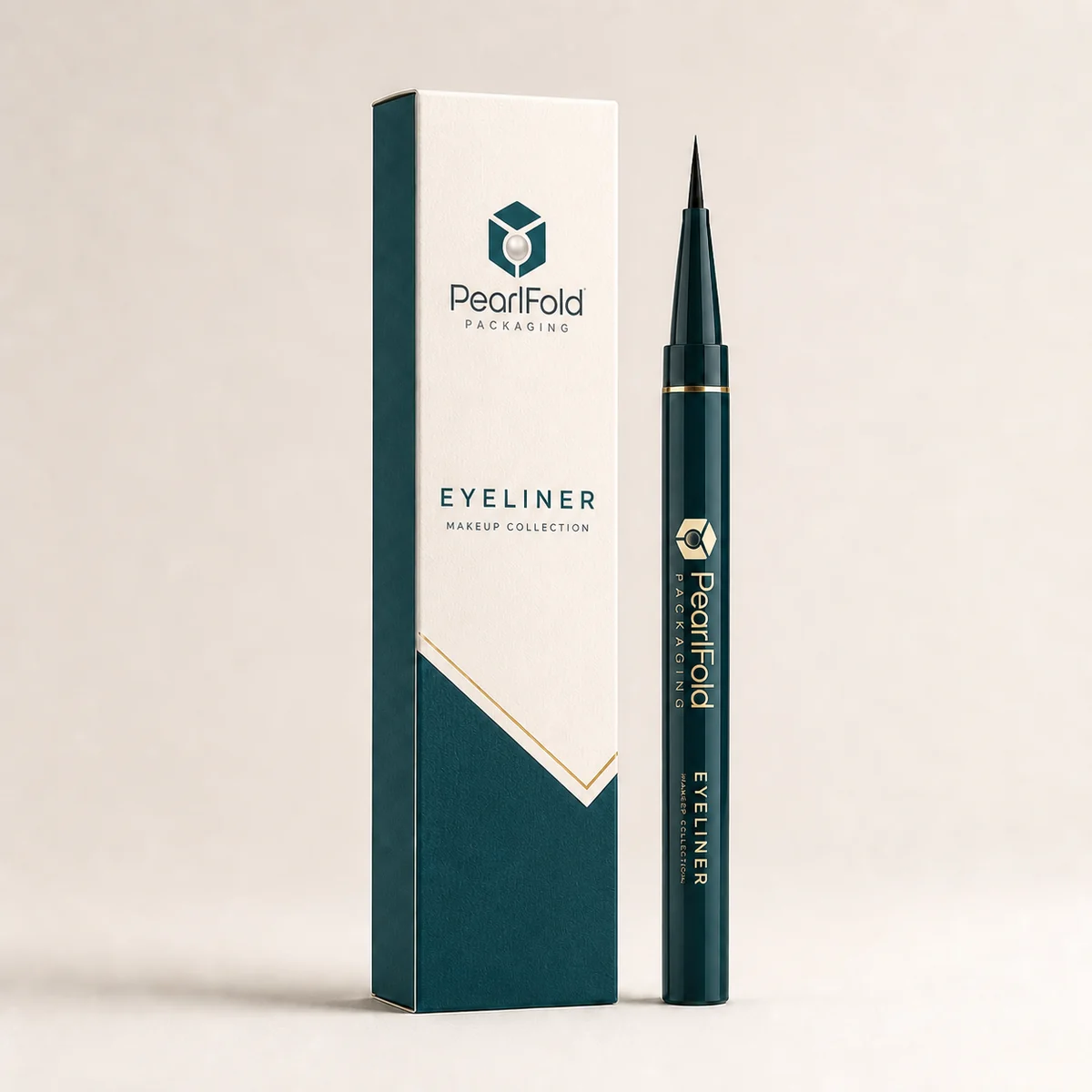
  • Custom Eyeliner Boxes

    Custom Eyeliner Boxes

    Custom Eyeliner Boxes are custom cartons planned around the dimensions, protection needs, artwork, and retail presentation of a eyeliner product. Match slim and compact eyeliner formats with clear variant presentation. PearlFold uses the product brief and physical measurements to define an appropriate structure before a quote is finalized, so the package is based on the actual wand tube rather than a generic stock assumption.

    Reviewed August 2026: this page describes a custom-quote packaging service for U.S. beauty and personal-care brands. Final size, board, insert, finish, order quantity, production schedule, and delivery terms must be confirmed in the written quotation. PearlFold does not present one unverified specification as suitable for every brand or product.

    What are custom eyeliner boxes used for?

    Custom Eyeliner Boxes give the wand tube a structured outer package for presentation, information, handling, and protection. A well-planned carton creates a clear surface for brand artwork and required product copy while helping the inner item stay organized through packing, storage, and retail display. The right solution may be a slim folding carton, but the final choice depends on the container profile, closure, weight, fragility, sales channel, and desired opening experience.

    The carton should support the product instead of competing with it. For a single retail unit, that usually means a clean silhouette, readable panel hierarchy, and controlled use of finishes. For a launch set, influencer kit, or premium assortment, the brief may call for more presentation space or a fitted insert. PearlFold evaluates those decisions as part of one packaging system so the structure, graphics, and unboxing sequence work together.

    How should a custom eyeliner box be sized?

    A custom eyeliner box should be sized from the finished product, not from a screen estimate. The quote brief should include the container’s height, width or diameter, depth, cap or closure profile, weight, and any parts that extend beyond the main body. If the product has a pump, dropper, wand, applicator, sleeve, or tamper feature, that detail can change the internal clearance and panel layout.

    PearlFold also considers how the product will enter and leave the carton. A snug fit can improve presentation, but a carton that is too tight may scuff the container or make packing difficult. Too much empty space can allow movement and make the package feel oversized. A prototype or production sample is the best way to confirm fit before a larger run. If an insert is needed, its opening, depth, finger access, and retention points should be evaluated with the actual product.

    Which box styles can work for eyeliner packaging?

    The appropriate structure depends on the product and the sales experience. Possible directions for this product family include folding cartons; tuck-end boxes; sleeves; window boxes. These are planning directions, not a promise that every style fits every container. A lightweight retail item may only need a folding carton, while a fragile glass component or coordinated set may justify an insert or a more presentation-led structure.

    • Straight or reverse tuck cartons: efficient retail structures when the container has a stable, compact profile.
    • Auto-bottom or reinforced folding cartons: worth evaluating when weight or packing speed calls for more base support.
    • Sleeves and trays: useful when the product should reveal in stages or when a coordinated inner tray improves presentation.
    • Fitted presentation boxes: suited to selected sets, gifting, PR mailers, or premium programs after cost and shipping impact are reviewed.

    What materials and finishes should a U.S. beauty brand consider?

    Material selection starts with structure, print surface, protection, and the brand’s documented requirements. Relevant directions may include paperboard; kraft; rigid board for sets. The final board grade and thickness should be selected after the dimensions, weight, and converting method are known. Sustainability language should only be used when the chosen material, supplier documentation, and disposal pathway support the exact claim.

    Finishes can guide attention without covering every panel. Matte or gloss coatings, spot treatments, embossing, debossing, foil details, and textured papers may be evaluated against the artwork and budget. Fine type, barcodes, ingredient copy, and regulatory information need enough contrast and quiet space. A finish that looks strong in a digital mockup should still be tested for rub resistance, fold cracking, legibility, and color behavior on the selected board.

    How should artwork be organized on Custom Eyeliner Boxes?

    Artwork should follow the approved dieline and keep critical elements away from folds, glue areas, cut lines, and closure panels. The principal display panel normally carries the clearest brand and product identification. Secondary panels can organize directions, ingredient or legal copy supplied by the brand, quantity statements, barcodes, recycling guidance that can be substantiated, and other market-specific information.

    For U.S. distribution, the brand remains responsible for confirming the copy and labeling rules that apply to its product. PearlFold can organize the packaging production file around supplied content, but packaging design does not replace legal or regulatory review. Before release, check spelling, shade or variant names, barcode accuracy, color references, image resolution, overprint settings, and the relationship between every panel and the physical opening direction.

    Custom packaging or a stock carton: which is the better fit?

    Decision factor Custom Eyeliner packaging Stock carton
    Fit Planned around the supplied product dimensions and closure profile Limited to available standard sizes
    Artwork Built around an approved dieline and brand panel hierarchy May rely on labels, sleeves, or restricted print areas
    Insert planning Can be evaluated with the actual container and presentation goal Usually requires a separate workaround
    Best use Retail launches, repeat product lines, sets, and brand-led presentation Early samples or situations where speed and existing size matter more than fit

    Custom packaging is worth considering when fit, shelf identity, panel space, or a controlled unboxing sequence affects the sale. A stock carton can still be practical for early testing. The useful comparison is not “custom is always better.” The decision should account for product readiness, artwork status, quantity, budget, schedule, shipping method, and the cost of poor fit.

    What information is needed for an accurate custom packaging quote?

    A clear brief reduces revisions and makes options easier to compare. Send the product dimensions, product weight, container photographs, desired quantity range, target delivery location, preferred structure, artwork status, finish direction, insert requirement, and target timing. If the product is still in development, identify which measurements are final and which may change.

    • Finished wand tube dimensions and closure details
    • Desired number of units and any planned product variants
    • Retail, e-commerce, subscription, gifting, or launch-kit use
    • Print files, color references, and required information panels
    • Protection, insert, assembly, packing, and shipping considerations

    PearlFold can then discuss a packaging direction and prepare a project-specific quotation. Related packaging pages that may help with range planning include Custom Eyeshadow Boxes, Custom Eyeshadow Palette Boxes, and Custom Foundation Boxes. Each related product should still receive its own measurements and packaging brief.

    Frequently asked questions about Custom Eyeliner Boxes

    Can the carton be matched to an existing product container?

    Yes, the design process can begin from an existing container’s finished dimensions and photographs. A physical sample or prototype is recommended when small tolerances, unusual closures, glass weight, or an insert affect fit. Final compatibility should be approved before the production quantity is released.

    Can one design system cover several shades or variants?

    A shared structure can often support a coordinated range when the containers use the same dimensions. Artwork files can then organize shade, scent, formula, or size differences through a controlled visual system. Each SKU and barcode should be checked separately before production.

    Are premium finishes required?

    No. Strong typography, color control, board selection, and accurate construction can create a premium result without applying every decorative process. Use a finish when it supports hierarchy, touch, durability, or brand recognition, and confirm its behavior on the chosen material.

    How do I start a custom eyeliner boxes project?

    Start with the product dimensions, quantity range, delivery location, artwork status, and a short description of the desired presentation. Use the Get a Custom Quote pathway to share those details. PearlFold can review the brief and identify the next structural, artwork, sampling, and quotation decisions.
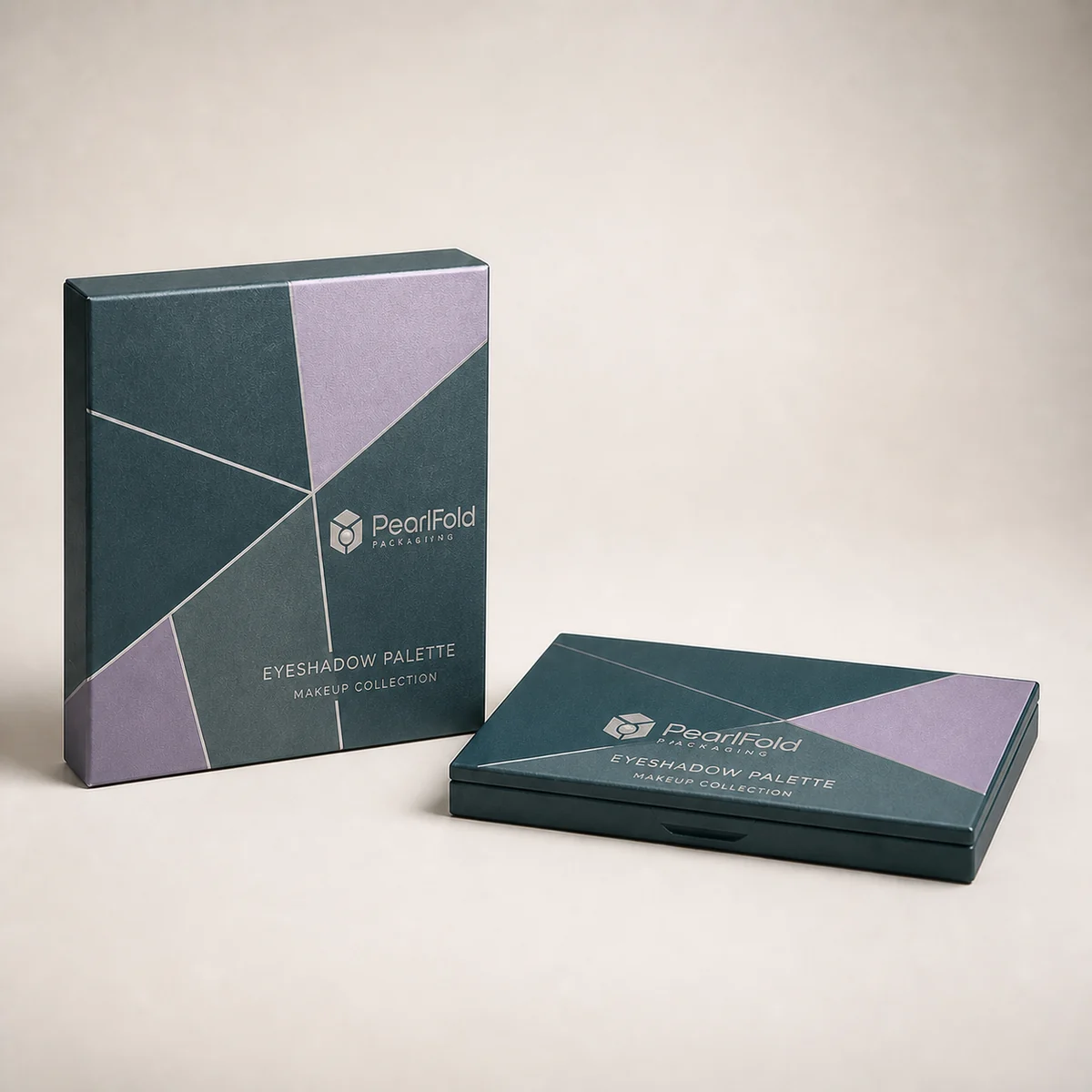
  • Custom Eyeshadow Boxes

    Custom Eyeshadow Boxes

    Custom Eyeshadow Boxes are custom cartons planned around the dimensions, protection needs, artwork, and retail presentation of a eyeshadow product. Protect compact color cosmetics and communicate shade or finish variants. PearlFold uses the product brief and physical measurements to define an appropriate structure before a quote is finalized, so the package is based on the actual primary product container rather than a generic stock assumption.

    Reviewed August 2026: this page describes a custom-quote packaging service for U.S. beauty and personal-care brands. Final size, board, insert, finish, order quantity, production schedule, and delivery terms must be confirmed in the written quotation. PearlFold does not present one unverified specification as suitable for every brand or product.

    What are custom eyeshadow boxes used for?

    Custom Eyeshadow Boxes give the primary product container a structured outer package for presentation, information, handling, and protection. A well-planned carton creates a clear surface for brand artwork and required product copy while helping the inner item stay organized through packing, storage, and retail display. The right solution may be a size-matched folding carton or presentation box, but the final choice depends on the container profile, closure, weight, fragility, sales channel, and desired opening experience.

    The carton should support the product instead of competing with it. For a single retail unit, that usually means a clean silhouette, readable panel hierarchy, and controlled use of finishes. For a launch set, influencer kit, or premium assortment, the brief may call for more presentation space or a fitted insert. PearlFold evaluates those decisions as part of one packaging system so the structure, graphics, and unboxing sequence work together.

    How should a custom eyeshadow box be sized?

    A custom eyeshadow box should be sized from the finished product, not from a screen estimate. The quote brief should include the container’s height, width or diameter, depth, cap or closure profile, weight, and any parts that extend beyond the main body. If the product has a pump, dropper, wand, applicator, sleeve, or tamper feature, that detail can change the internal clearance and panel layout.

    PearlFold also considers how the product will enter and leave the carton. A snug fit can improve presentation, but a carton that is too tight may scuff the container or make packing difficult. Too much empty space can allow movement and make the package feel oversized. A prototype or production sample is the best way to confirm fit before a larger run. If an insert is needed, its opening, depth, finger access, and retention points should be evaluated with the actual product.

    Which box styles can work for eyeshadow packaging?

    The appropriate structure depends on the product and the sales experience. Possible directions for this product family include folding cartons; tuck-end boxes; sleeves; window boxes. These are planning directions, not a promise that every style fits every container. A lightweight retail item may only need a folding carton, while a fragile glass component or coordinated set may justify an insert or a more presentation-led structure.

    • Straight or reverse tuck cartons: efficient retail structures when the container has a stable, compact profile.
    • Auto-bottom or reinforced folding cartons: worth evaluating when weight or packing speed calls for more base support.
    • Sleeves and trays: useful when the product should reveal in stages or when a coordinated inner tray improves presentation.
    • Fitted presentation boxes: suited to selected sets, gifting, PR mailers, or premium programs after cost and shipping impact are reviewed.

    What materials and finishes should a U.S. beauty brand consider?

    Material selection starts with structure, print surface, protection, and the brand’s documented requirements. Relevant directions may include paperboard; kraft; rigid board for sets. The final board grade and thickness should be selected after the dimensions, weight, and converting method are known. Sustainability language should only be used when the chosen material, supplier documentation, and disposal pathway support the exact claim.

    Finishes can guide attention without covering every panel. Matte or gloss coatings, spot treatments, embossing, debossing, foil details, and textured papers may be evaluated against the artwork and budget. Fine type, barcodes, ingredient copy, and regulatory information need enough contrast and quiet space. A finish that looks strong in a digital mockup should still be tested for rub resistance, fold cracking, legibility, and color behavior on the selected board.

    How should artwork be organized on Custom Eyeshadow Boxes?

    Artwork should follow the approved dieline and keep critical elements away from folds, glue areas, cut lines, and closure panels. The principal display panel normally carries the clearest brand and product identification. Secondary panels can organize directions, ingredient or legal copy supplied by the brand, quantity statements, barcodes, recycling guidance that can be substantiated, and other market-specific information.

    For U.S. distribution, the brand remains responsible for confirming the copy and labeling rules that apply to its product. PearlFold can organize the packaging production file around supplied content, but packaging design does not replace legal or regulatory review. Before release, check spelling, shade or variant names, barcode accuracy, color references, image resolution, overprint settings, and the relationship between every panel and the physical opening direction.

    Custom packaging or a stock carton: which is the better fit?

    Decision factor Custom Eyeshadow packaging Stock carton
    Fit Planned around the supplied product dimensions and closure profile Limited to available standard sizes
    Artwork Built around an approved dieline and brand panel hierarchy May rely on labels, sleeves, or restricted print areas
    Insert planning Can be evaluated with the actual container and presentation goal Usually requires a separate workaround
    Best use Retail launches, repeat product lines, sets, and brand-led presentation Early samples or situations where speed and existing size matter more than fit

    Custom packaging is worth considering when fit, shelf identity, panel space, or a controlled unboxing sequence affects the sale. A stock carton can still be practical for early testing. The useful comparison is not “custom is always better.” The decision should account for product readiness, artwork status, quantity, budget, schedule, shipping method, and the cost of poor fit.

    What information is needed for an accurate custom packaging quote?

    A clear brief reduces revisions and makes options easier to compare. Send the product dimensions, product weight, container photographs, desired quantity range, target delivery location, preferred structure, artwork status, finish direction, insert requirement, and target timing. If the product is still in development, identify which measurements are final and which may change.

    • Finished primary product container dimensions and closure details
    • Desired number of units and any planned product variants
    • Retail, e-commerce, subscription, gifting, or launch-kit use
    • Print files, color references, and required information panels
    • Protection, insert, assembly, packing, and shipping considerations

    PearlFold can then discuss a packaging direction and prepare a project-specific quotation. Related packaging pages that may help with range planning include Custom Eyeshadow Palette Boxes, Custom Foundation Boxes, and Custom Concealer Boxes. Each related product should still receive its own measurements and packaging brief.

    Frequently asked questions about Custom Eyeshadow Boxes

    Can the carton be matched to an existing product container?

    Yes, the design process can begin from an existing container’s finished dimensions and photographs. A physical sample or prototype is recommended when small tolerances, unusual closures, glass weight, or an insert affect fit. Final compatibility should be approved before the production quantity is released.

    Can one design system cover several shades or variants?

    A shared structure can often support a coordinated range when the containers use the same dimensions. Artwork files can then organize shade, scent, formula, or size differences through a controlled visual system. Each SKU and barcode should be checked separately before production.

    Are premium finishes required?

    No. Strong typography, color control, board selection, and accurate construction can create a premium result without applying every decorative process. Use a finish when it supports hierarchy, touch, durability, or brand recognition, and confirm its behavior on the chosen material.

    How do I start a custom eyeshadow boxes project?

    Start with the product dimensions, quantity range, delivery location, artwork status, and a short description of the desired presentation. Use the Get a Custom Quote pathway to share those details. PearlFold can review the brief and identify the next structural, artwork, sampling, and quotation decisions.
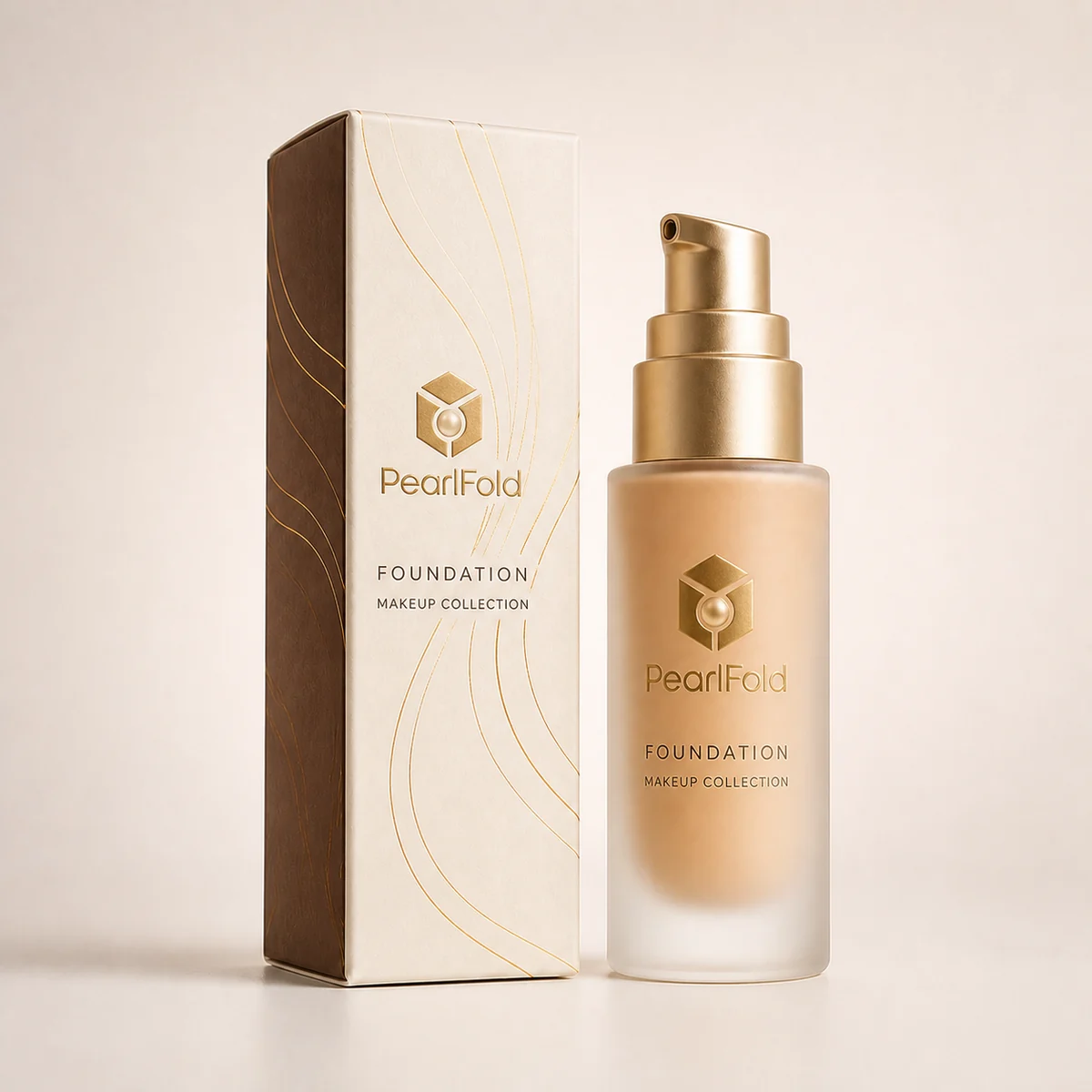
  • Custom Eyeshadow Palette Boxes

    Custom Eyeshadow Palette Boxes

    Custom Eyeshadow Palette Boxes are custom cartons planned around the dimensions, protection needs, artwork, and retail presentation of a eyeshadow palette product. Package palettes with structural support for larger, presentation-led formats. PearlFold uses the product brief and physical measurements to define an appropriate structure before a quote is finalized, so the package is based on the actual palette rather than a generic stock assumption.

    Reviewed August 2026: this page describes a custom-quote packaging service for U.S. beauty and personal-care brands. Final size, board, insert, finish, order quantity, production schedule, and delivery terms must be confirmed in the written quotation. PearlFold does not present one unverified specification as suitable for every brand or product.

    What are custom eyeshadow palette boxes used for?

    Custom Eyeshadow Palette Boxes give the palette a structured outer package for presentation, information, handling, and protection. A well-planned carton creates a clear surface for brand artwork and required product copy while helping the inner item stay organized through packing, storage, and retail display. The right solution may be a shallow presentation carton, but the final choice depends on the container profile, closure, weight, fragility, sales channel, and desired opening experience.

    The carton should support the product instead of competing with it. For a single retail unit, that usually means a clean silhouette, readable panel hierarchy, and controlled use of finishes. For a launch set, influencer kit, or premium assortment, the brief may call for more presentation space or a fitted insert. PearlFold evaluates those decisions as part of one packaging system so the structure, graphics, and unboxing sequence work together.

    How should a custom eyeshadow palette box be sized?

    A custom eyeshadow palette box should be sized from the finished product, not from a screen estimate. The quote brief should include the container’s height, width or diameter, depth, cap or closure profile, weight, and any parts that extend beyond the main body. If the product has a pump, dropper, wand, applicator, sleeve, or tamper feature, that detail can change the internal clearance and panel layout.

    PearlFold also considers how the product will enter and leave the carton. A snug fit can improve presentation, but a carton that is too tight may scuff the container or make packing difficult. Too much empty space can allow movement and make the package feel oversized. A prototype or production sample is the best way to confirm fit before a larger run. If an insert is needed, its opening, depth, finger access, and retention points should be evaluated with the actual product.

    Which box styles can work for eyeshadow palette packaging?

    The appropriate structure depends on the product and the sales experience. Possible directions for this product family include folding cartons; tuck-end boxes; sleeves; window boxes. These are planning directions, not a promise that every style fits every container. A lightweight retail item may only need a folding carton, while a fragile glass component or coordinated set may justify an insert or a more presentation-led structure.

    • Straight or reverse tuck cartons: efficient retail structures when the container has a stable, compact profile.
    • Auto-bottom or reinforced folding cartons: worth evaluating when weight or packing speed calls for more base support.
    • Sleeves and trays: useful when the product should reveal in stages or when a coordinated inner tray improves presentation.
    • Fitted presentation boxes: suited to selected sets, gifting, PR mailers, or premium programs after cost and shipping impact are reviewed.

    What materials and finishes should a U.S. beauty brand consider?

    Material selection starts with structure, print surface, protection, and the brand’s documented requirements. Relevant directions may include paperboard; kraft; rigid board for sets. The final board grade and thickness should be selected after the dimensions, weight, and converting method are known. Sustainability language should only be used when the chosen material, supplier documentation, and disposal pathway support the exact claim.

    Finishes can guide attention without covering every panel. Matte or gloss coatings, spot treatments, embossing, debossing, foil details, and textured papers may be evaluated against the artwork and budget. Fine type, barcodes, ingredient copy, and regulatory information need enough contrast and quiet space. A finish that looks strong in a digital mockup should still be tested for rub resistance, fold cracking, legibility, and color behavior on the selected board.

    How should artwork be organized on Custom Eyeshadow Palette Boxes?

    Artwork should follow the approved dieline and keep critical elements away from folds, glue areas, cut lines, and closure panels. The principal display panel normally carries the clearest brand and product identification. Secondary panels can organize directions, ingredient or legal copy supplied by the brand, quantity statements, barcodes, recycling guidance that can be substantiated, and other market-specific information.

    For U.S. distribution, the brand remains responsible for confirming the copy and labeling rules that apply to its product. PearlFold can organize the packaging production file around supplied content, but packaging design does not replace legal or regulatory review. Before release, check spelling, shade or variant names, barcode accuracy, color references, image resolution, overprint settings, and the relationship between every panel and the physical opening direction.

    Custom packaging or a stock carton: which is the better fit?

    Decision factor Custom Eyeshadow Palette packaging Stock carton
    Fit Planned around the supplied product dimensions and closure profile Limited to available standard sizes
    Artwork Built around an approved dieline and brand panel hierarchy May rely on labels, sleeves, or restricted print areas
    Insert planning Can be evaluated with the actual container and presentation goal Usually requires a separate workaround
    Best use Retail launches, repeat product lines, sets, and brand-led presentation Early samples or situations where speed and existing size matter more than fit

    Custom packaging is worth considering when fit, shelf identity, panel space, or a controlled unboxing sequence affects the sale. A stock carton can still be practical for early testing. The useful comparison is not “custom is always better.” The decision should account for product readiness, artwork status, quantity, budget, schedule, shipping method, and the cost of poor fit.

    What information is needed for an accurate custom packaging quote?

    A clear brief reduces revisions and makes options easier to compare. Send the product dimensions, product weight, container photographs, desired quantity range, target delivery location, preferred structure, artwork status, finish direction, insert requirement, and target timing. If the product is still in development, identify which measurements are final and which may change.

    • Finished palette dimensions and closure details
    • Desired number of units and any planned product variants
    • Retail, e-commerce, subscription, gifting, or launch-kit use
    • Print files, color references, and required information panels
    • Protection, insert, assembly, packing, and shipping considerations

    PearlFold can then discuss a packaging direction and prepare a project-specific quotation. Related packaging pages that may help with range planning include Custom Foundation Boxes, Custom Concealer Boxes, and Custom Blush Boxes. Each related product should still receive its own measurements and packaging brief.

    Frequently asked questions about Custom Eyeshadow Palette Boxes

    Can the carton be matched to an existing product container?

    Yes, the design process can begin from an existing container’s finished dimensions and photographs. A physical sample or prototype is recommended when small tolerances, unusual closures, glass weight, or an insert affect fit. Final compatibility should be approved before the production quantity is released.

    Can one design system cover several shades or variants?

    A shared structure can often support a coordinated range when the containers use the same dimensions. Artwork files can then organize shade, scent, formula, or size differences through a controlled visual system. Each SKU and barcode should be checked separately before production.

    Are premium finishes required?

    No. Strong typography, color control, board selection, and accurate construction can create a premium result without applying every decorative process. Use a finish when it supports hierarchy, touch, durability, or brand recognition, and confirm its behavior on the chosen material.

    How do I start a custom eyeshadow palette boxes project?

    Start with the product dimensions, quantity range, delivery location, artwork status, and a short description of the desired presentation. Use the Get a Custom Quote pathway to share those details. PearlFold can review the brief and identify the next structural, artwork, sampling, and quotation decisions.
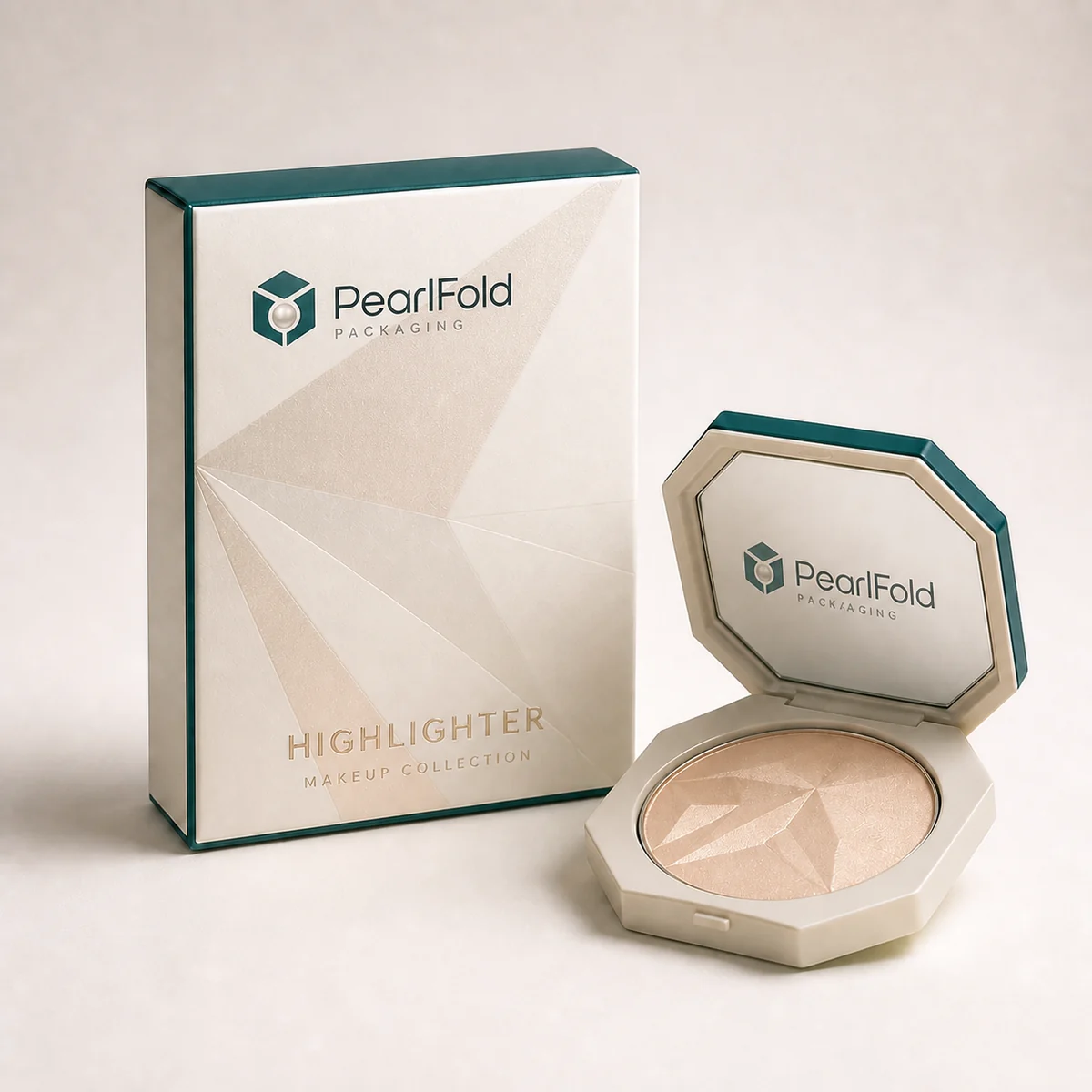
  • Custom Foundation Boxes

    Custom Foundation Boxes

    Custom Foundation Boxes are custom cartons planned around the dimensions, protection needs, artwork, and retail presentation of a foundation product. Build cartons around varied foundation formats and shade-line organization. PearlFold uses the product brief and physical measurements to define an appropriate structure before a quote is finalized, so the package is based on the actual bottle, pump, or dropper container rather than a generic stock assumption.

    Reviewed August 2026: this page describes a custom-quote packaging service for U.S. beauty and personal-care brands. Final size, board, insert, finish, order quantity, production schedule, and delivery terms must be confirmed in the written quotation. PearlFold does not present one unverified specification as suitable for every brand or product.

    What are custom foundation boxes used for?

    Custom Foundation Boxes give the bottle, pump, or dropper container a structured outer package for presentation, information, handling, and protection. A well-planned carton creates a clear surface for brand artwork and required product copy while helping the inner item stay organized through packing, storage, and retail display. The right solution may be a size-matched folding carton, but the final choice depends on the container profile, closure, weight, fragility, sales channel, and desired opening experience.

    The carton should support the product instead of competing with it. For a single retail unit, that usually means a clean silhouette, readable panel hierarchy, and controlled use of finishes. For a launch set, influencer kit, or premium assortment, the brief may call for more presentation space or a fitted insert. PearlFold evaluates those decisions as part of one packaging system so the structure, graphics, and unboxing sequence work together.

    How should a custom foundation box be sized?

    A custom foundation box should be sized from the finished product, not from a screen estimate. The quote brief should include the container’s height, width or diameter, depth, cap or closure profile, weight, and any parts that extend beyond the main body. If the product has a pump, dropper, wand, applicator, sleeve, or tamper feature, that detail can change the internal clearance and panel layout.

    PearlFold also considers how the product will enter and leave the carton. A snug fit can improve presentation, but a carton that is too tight may scuff the container or make packing difficult. Too much empty space can allow movement and make the package feel oversized. A prototype or production sample is the best way to confirm fit before a larger run. If an insert is needed, its opening, depth, finger access, and retention points should be evaluated with the actual product.

    Which box styles can work for foundation packaging?

    The appropriate structure depends on the product and the sales experience. Possible directions for this product family include folding cartons; tuck-end boxes; sleeves; window boxes. These are planning directions, not a promise that every style fits every container. A lightweight retail item may only need a folding carton, while a fragile glass component or coordinated set may justify an insert or a more presentation-led structure.

    • Straight or reverse tuck cartons: efficient retail structures when the container has a stable, compact profile.
    • Auto-bottom or reinforced folding cartons: worth evaluating when weight or packing speed calls for more base support.
    • Sleeves and trays: useful when the product should reveal in stages or when a coordinated inner tray improves presentation.
    • Fitted presentation boxes: suited to selected sets, gifting, PR mailers, or premium programs after cost and shipping impact are reviewed.

    What materials and finishes should a U.S. beauty brand consider?

    Material selection starts with structure, print surface, protection, and the brand’s documented requirements. Relevant directions may include paperboard; kraft; rigid board for sets. The final board grade and thickness should be selected after the dimensions, weight, and converting method are known. Sustainability language should only be used when the chosen material, supplier documentation, and disposal pathway support the exact claim.

    Finishes can guide attention without covering every panel. Matte or gloss coatings, spot treatments, embossing, debossing, foil details, and textured papers may be evaluated against the artwork and budget. Fine type, barcodes, ingredient copy, and regulatory information need enough contrast and quiet space. A finish that looks strong in a digital mockup should still be tested for rub resistance, fold cracking, legibility, and color behavior on the selected board.

    How should artwork be organized on Custom Foundation Boxes?

    Artwork should follow the approved dieline and keep critical elements away from folds, glue areas, cut lines, and closure panels. The principal display panel normally carries the clearest brand and product identification. Secondary panels can organize directions, ingredient or legal copy supplied by the brand, quantity statements, barcodes, recycling guidance that can be substantiated, and other market-specific information.

    For U.S. distribution, the brand remains responsible for confirming the copy and labeling rules that apply to its product. PearlFold can organize the packaging production file around supplied content, but packaging design does not replace legal or regulatory review. Before release, check spelling, shade or variant names, barcode accuracy, color references, image resolution, overprint settings, and the relationship between every panel and the physical opening direction.

    Custom packaging or a stock carton: which is the better fit?

    Decision factor Custom Foundation packaging Stock carton
    Fit Planned around the supplied product dimensions and closure profile Limited to available standard sizes
    Artwork Built around an approved dieline and brand panel hierarchy May rely on labels, sleeves, or restricted print areas
    Insert planning Can be evaluated with the actual container and presentation goal Usually requires a separate workaround
    Best use Retail launches, repeat product lines, sets, and brand-led presentation Early samples or situations where speed and existing size matter more than fit

    Custom packaging is worth considering when fit, shelf identity, panel space, or a controlled unboxing sequence affects the sale. A stock carton can still be practical for early testing. The useful comparison is not “custom is always better.” The decision should account for product readiness, artwork status, quantity, budget, schedule, shipping method, and the cost of poor fit.

    What information is needed for an accurate custom packaging quote?

    A clear brief reduces revisions and makes options easier to compare. Send the product dimensions, product weight, container photographs, desired quantity range, target delivery location, preferred structure, artwork status, finish direction, insert requirement, and target timing. If the product is still in development, identify which measurements are final and which may change.

    • Finished bottle, pump, or dropper container dimensions and closure details
    • Desired number of units and any planned product variants
    • Retail, e-commerce, subscription, gifting, or launch-kit use
    • Print files, color references, and required information panels
    • Protection, insert, assembly, packing, and shipping considerations

    PearlFold can then discuss a packaging direction and prepare a project-specific quotation. Related packaging pages that may help with range planning include Custom Concealer Boxes, Custom Blush Boxes, and Custom Bronzer Boxes. Each related product should still receive its own measurements and packaging brief.

    Frequently asked questions about Custom Foundation Boxes

    Can the carton be matched to an existing product container?

    Yes, the design process can begin from an existing container’s finished dimensions and photographs. A physical sample or prototype is recommended when small tolerances, unusual closures, glass weight, or an insert affect fit. Final compatibility should be approved before the production quantity is released.

    Can one design system cover several shades or variants?

    A shared structure can often support a coordinated range when the containers use the same dimensions. Artwork files can then organize shade, scent, formula, or size differences through a controlled visual system. Each SKU and barcode should be checked separately before production.

    Are premium finishes required?

    No. Strong typography, color control, board selection, and accurate construction can create a premium result without applying every decorative process. Use a finish when it supports hierarchy, touch, durability, or brand recognition, and confirm its behavior on the chosen material.

    How do I start a custom foundation boxes project?

    Start with the product dimensions, quantity range, delivery location, artwork status, and a short description of the desired presentation. Use the Get a Custom Quote pathway to share those details. PearlFold can review the brief and identify the next structural, artwork, sampling, and quotation decisions.
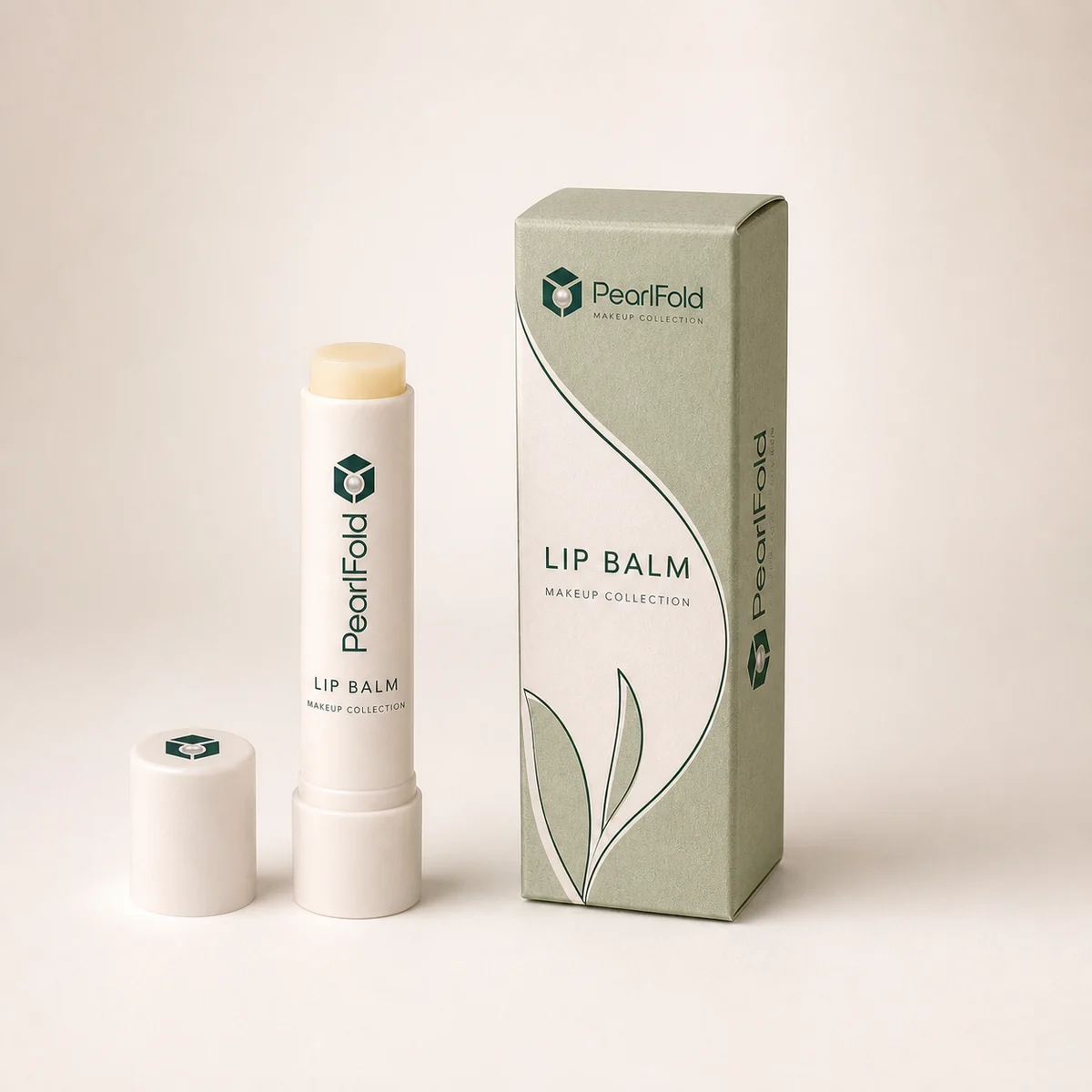
  • Custom Highlighter Boxes

    Custom Highlighter Boxes

    Custom Highlighter Boxes are custom cartons planned around the dimensions, protection needs, artwork, and retail presentation of a highlighter product. Present reflective-finish cosmetics in structure-appropriate cartons. PearlFold uses the product brief and physical measurements to define an appropriate structure before a quote is finalized, so the package is based on the actual compact rather than a generic stock assumption.

    Reviewed August 2026: this page describes a custom-quote packaging service for U.S. beauty and personal-care brands. Final size, board, insert, finish, order quantity, production schedule, and delivery terms must be confirmed in the written quotation. PearlFold does not present one unverified specification as suitable for every brand or product.

    What are custom highlighter boxes used for?

    Custom Highlighter Boxes give the compact a structured outer package for presentation, information, handling, and protection. A well-planned carton creates a clear surface for brand artwork and required product copy while helping the inner item stay organized through packing, storage, and retail display. The right solution may be a shallow folding carton, but the final choice depends on the container profile, closure, weight, fragility, sales channel, and desired opening experience.

    The carton should support the product instead of competing with it. For a single retail unit, that usually means a clean silhouette, readable panel hierarchy, and controlled use of finishes. For a launch set, influencer kit, or premium assortment, the brief may call for more presentation space or a fitted insert. PearlFold evaluates those decisions as part of one packaging system so the structure, graphics, and unboxing sequence work together.

    How should a custom highlighter box be sized?

    A custom highlighter box should be sized from the finished product, not from a screen estimate. The quote brief should include the container’s height, width or diameter, depth, cap or closure profile, weight, and any parts that extend beyond the main body. If the product has a pump, dropper, wand, applicator, sleeve, or tamper feature, that detail can change the internal clearance and panel layout.

    PearlFold also considers how the product will enter and leave the carton. A snug fit can improve presentation, but a carton that is too tight may scuff the container or make packing difficult. Too much empty space can allow movement and make the package feel oversized. A prototype or production sample is the best way to confirm fit before a larger run. If an insert is needed, its opening, depth, finger access, and retention points should be evaluated with the actual product.

    Which box styles can work for highlighter packaging?

    The appropriate structure depends on the product and the sales experience. Possible directions for this product family include folding cartons; tuck-end boxes; sleeves; window boxes. These are planning directions, not a promise that every style fits every container. A lightweight retail item may only need a folding carton, while a fragile glass component or coordinated set may justify an insert or a more presentation-led structure.

    • Straight or reverse tuck cartons: efficient retail structures when the container has a stable, compact profile.
    • Auto-bottom or reinforced folding cartons: worth evaluating when weight or packing speed calls for more base support.
    • Sleeves and trays: useful when the product should reveal in stages or when a coordinated inner tray improves presentation.
    • Fitted presentation boxes: suited to selected sets, gifting, PR mailers, or premium programs after cost and shipping impact are reviewed.

    What materials and finishes should a U.S. beauty brand consider?

    Material selection starts with structure, print surface, protection, and the brand’s documented requirements. Relevant directions may include paperboard; kraft; rigid board for sets. The final board grade and thickness should be selected after the dimensions, weight, and converting method are known. Sustainability language should only be used when the chosen material, supplier documentation, and disposal pathway support the exact claim.

    Finishes can guide attention without covering every panel. Matte or gloss coatings, spot treatments, embossing, debossing, foil details, and textured papers may be evaluated against the artwork and budget. Fine type, barcodes, ingredient copy, and regulatory information need enough contrast and quiet space. A finish that looks strong in a digital mockup should still be tested for rub resistance, fold cracking, legibility, and color behavior on the selected board.

    How should artwork be organized on Custom Highlighter Boxes?

    Artwork should follow the approved dieline and keep critical elements away from folds, glue areas, cut lines, and closure panels. The principal display panel normally carries the clearest brand and product identification. Secondary panels can organize directions, ingredient or legal copy supplied by the brand, quantity statements, barcodes, recycling guidance that can be substantiated, and other market-specific information.

    For U.S. distribution, the brand remains responsible for confirming the copy and labeling rules that apply to its product. PearlFold can organize the packaging production file around supplied content, but packaging design does not replace legal or regulatory review. Before release, check spelling, shade or variant names, barcode accuracy, color references, image resolution, overprint settings, and the relationship between every panel and the physical opening direction.

    Custom packaging or a stock carton: which is the better fit?

    Decision factor Custom Highlighter packaging Stock carton
    Fit Planned around the supplied product dimensions and closure profile Limited to available standard sizes
    Artwork Built around an approved dieline and brand panel hierarchy May rely on labels, sleeves, or restricted print areas
    Insert planning Can be evaluated with the actual container and presentation goal Usually requires a separate workaround
    Best use Retail launches, repeat product lines, sets, and brand-led presentation Early samples or situations where speed and existing size matter more than fit

    Custom packaging is worth considering when fit, shelf identity, panel space, or a controlled unboxing sequence affects the sale. A stock carton can still be practical for early testing. The useful comparison is not “custom is always better.” The decision should account for product readiness, artwork status, quantity, budget, schedule, shipping method, and the cost of poor fit.

    What information is needed for an accurate custom packaging quote?

    A clear brief reduces revisions and makes options easier to compare. Send the product dimensions, product weight, container photographs, desired quantity range, target delivery location, preferred structure, artwork status, finish direction, insert requirement, and target timing. If the product is still in development, identify which measurements are final and which may change.

    • Finished compact dimensions and closure details
    • Desired number of units and any planned product variants
    • Retail, e-commerce, subscription, gifting, or launch-kit use
    • Print files, color references, and required information panels
    • Protection, insert, assembly, packing, and shipping considerations

    PearlFold can then discuss a packaging direction and prepare a project-specific quotation. Related packaging pages that may help with range planning include Custom Contour Boxes, Custom Setting Powder Boxes, and Custom Primer Boxes. Each related product should still receive its own measurements and packaging brief.

    Frequently asked questions about Custom Highlighter Boxes

    Can the carton be matched to an existing product container?

    Yes, the design process can begin from an existing container’s finished dimensions and photographs. A physical sample or prototype is recommended when small tolerances, unusual closures, glass weight, or an insert affect fit. Final compatibility should be approved before the production quantity is released.

    Can one design system cover several shades or variants?

    A shared structure can often support a coordinated range when the containers use the same dimensions. Artwork files can then organize shade, scent, formula, or size differences through a controlled visual system. Each SKU and barcode should be checked separately before production.

    Are premium finishes required?

    No. Strong typography, color control, board selection, and accurate construction can create a premium result without applying every decorative process. Use a finish when it supports hierarchy, touch, durability, or brand recognition, and confirm its behavior on the chosen material.

    How do I start a custom highlighter boxes project?

    Start with the product dimensions, quantity range, delivery location, artwork status, and a short description of the desired presentation. Use the Get a Custom Quote pathway to share those details. PearlFold can review the brief and identify the next structural, artwork, sampling, and quotation decisions.
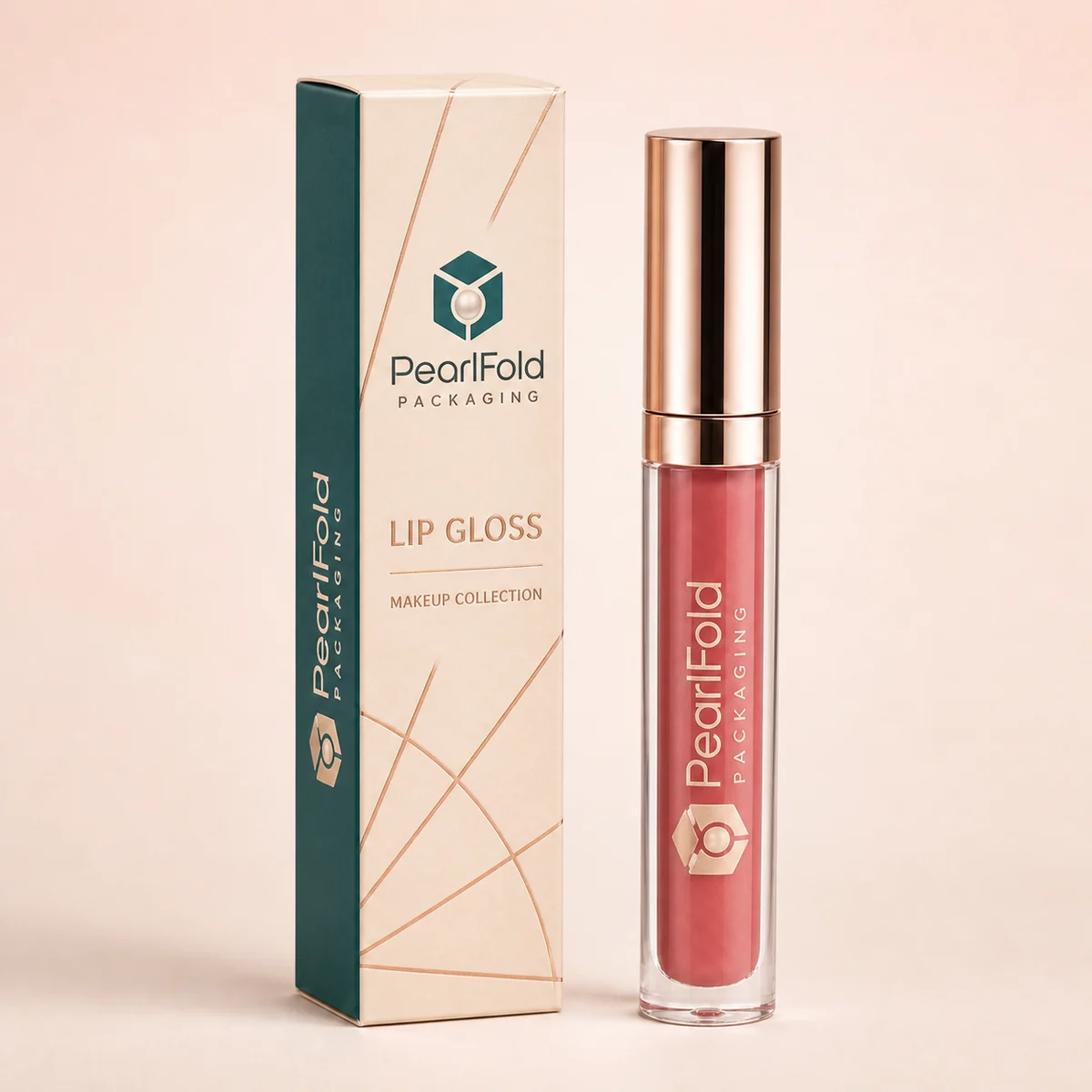
  • Custom Lip Balm Boxes

    Custom Lip Balm Boxes

    Custom Lip Balm Boxes are custom cartons planned around the dimensions, protection needs, artwork, and retail presentation of a lip balm product. Protect compact lip-care formats without oversized packaging. PearlFold uses the product brief and physical measurements to define an appropriate structure before a quote is finalized, so the package is based on the actual tube rather than a generic stock assumption.

    Reviewed August 2026: this page describes a custom-quote packaging service for U.S. beauty and personal-care brands. Final size, board, insert, finish, order quantity, production schedule, and delivery terms must be confirmed in the written quotation. PearlFold does not present one unverified specification as suitable for every brand or product.

    What are custom lip balm boxes used for?

    Custom Lip Balm Boxes give the tube a structured outer package for presentation, information, handling, and protection. A well-planned carton creates a clear surface for brand artwork and required product copy while helping the inner item stay organized through packing, storage, and retail display. The right solution may be a slim folding carton, but the final choice depends on the container profile, closure, weight, fragility, sales channel, and desired opening experience.

    The carton should support the product instead of competing with it. For a single retail unit, that usually means a clean silhouette, readable panel hierarchy, and controlled use of finishes. For a launch set, influencer kit, or premium assortment, the brief may call for more presentation space or a fitted insert. PearlFold evaluates those decisions as part of one packaging system so the structure, graphics, and unboxing sequence work together.

    How should a custom lip balm box be sized?

    A custom lip balm box should be sized from the finished product, not from a screen estimate. The quote brief should include the container’s height, width or diameter, depth, cap or closure profile, weight, and any parts that extend beyond the main body. If the product has a pump, dropper, wand, applicator, sleeve, or tamper feature, that detail can change the internal clearance and panel layout.

    PearlFold also considers how the product will enter and leave the carton. A snug fit can improve presentation, but a carton that is too tight may scuff the container or make packing difficult. Too much empty space can allow movement and make the package feel oversized. A prototype or production sample is the best way to confirm fit before a larger run. If an insert is needed, its opening, depth, finger access, and retention points should be evaluated with the actual product.

    Which box styles can work for lip balm packaging?

    The appropriate structure depends on the product and the sales experience. Possible directions for this product family include folding cartons; tuck-end boxes; sleeves; window boxes. These are planning directions, not a promise that every style fits every container. A lightweight retail item may only need a folding carton, while a fragile glass component or coordinated set may justify an insert or a more presentation-led structure.

    • Straight or reverse tuck cartons: efficient retail structures when the container has a stable, compact profile.
    • Auto-bottom or reinforced folding cartons: worth evaluating when weight or packing speed calls for more base support.
    • Sleeves and trays: useful when the product should reveal in stages or when a coordinated inner tray improves presentation.
    • Fitted presentation boxes: suited to selected sets, gifting, PR mailers, or premium programs after cost and shipping impact are reviewed.

    What materials and finishes should a U.S. beauty brand consider?

    Material selection starts with structure, print surface, protection, and the brand’s documented requirements. Relevant directions may include paperboard; kraft; rigid board for sets. The final board grade and thickness should be selected after the dimensions, weight, and converting method are known. Sustainability language should only be used when the chosen material, supplier documentation, and disposal pathway support the exact claim.

    Finishes can guide attention without covering every panel. Matte or gloss coatings, spot treatments, embossing, debossing, foil details, and textured papers may be evaluated against the artwork and budget. Fine type, barcodes, ingredient copy, and regulatory information need enough contrast and quiet space. A finish that looks strong in a digital mockup should still be tested for rub resistance, fold cracking, legibility, and color behavior on the selected board.

    How should artwork be organized on Custom Lip Balm Boxes?

    Artwork should follow the approved dieline and keep critical elements away from folds, glue areas, cut lines, and closure panels. The principal display panel normally carries the clearest brand and product identification. Secondary panels can organize directions, ingredient or legal copy supplied by the brand, quantity statements, barcodes, recycling guidance that can be substantiated, and other market-specific information.

    For U.S. distribution, the brand remains responsible for confirming the copy and labeling rules that apply to its product. PearlFold can organize the packaging production file around supplied content, but packaging design does not replace legal or regulatory review. Before release, check spelling, shade or variant names, barcode accuracy, color references, image resolution, overprint settings, and the relationship between every panel and the physical opening direction.

    Custom packaging or a stock carton: which is the better fit?

    Decision factor Custom Lip Balm packaging Stock carton
    Fit Planned around the supplied product dimensions and closure profile Limited to available standard sizes
    Artwork Built around an approved dieline and brand panel hierarchy May rely on labels, sleeves, or restricted print areas
    Insert planning Can be evaluated with the actual container and presentation goal Usually requires a separate workaround
    Best use Retail launches, repeat product lines, sets, and brand-led presentation Early samples or situations where speed and existing size matter more than fit

    Custom packaging is worth considering when fit, shelf identity, panel space, or a controlled unboxing sequence affects the sale. A stock carton can still be practical for early testing. The useful comparison is not “custom is always better.” The decision should account for product readiness, artwork status, quantity, budget, schedule, shipping method, and the cost of poor fit.

    What information is needed for an accurate custom packaging quote?

    A clear brief reduces revisions and makes options easier to compare. Send the product dimensions, product weight, container photographs, desired quantity range, target delivery location, preferred structure, artwork status, finish direction, insert requirement, and target timing. If the product is still in development, identify which measurements are final and which may change.

    • Finished tube dimensions and closure details
    • Desired number of units and any planned product variants
    • Retail, e-commerce, subscription, gifting, or launch-kit use
    • Print files, color references, and required information panels
    • Protection, insert, assembly, packing, and shipping considerations

    PearlFold can then discuss a packaging direction and prepare a project-specific quotation. Related packaging pages that may help with range planning include Custom Lip Liner Boxes, Custom Mascara Boxes, and Custom Eyeliner Boxes. Each related product should still receive its own measurements and packaging brief.

    Frequently asked questions about Custom Lip Balm Boxes

    Can the carton be matched to an existing product container?

    Yes, the design process can begin from an existing container’s finished dimensions and photographs. A physical sample or prototype is recommended when small tolerances, unusual closures, glass weight, or an insert affect fit. Final compatibility should be approved before the production quantity is released.

    Can one design system cover several shades or variants?

    A shared structure can often support a coordinated range when the containers use the same dimensions. Artwork files can then organize shade, scent, formula, or size differences through a controlled visual system. Each SKU and barcode should be checked separately before production.

    Are premium finishes required?

    No. Strong typography, color control, board selection, and accurate construction can create a premium result without applying every decorative process. Use a finish when it supports hierarchy, touch, durability, or brand recognition, and confirm its behavior on the chosen material.

    How do I start a custom lip balm boxes project?

    Start with the product dimensions, quantity range, delivery location, artwork status, and a short description of the desired presentation. Use the Get a Custom Quote pathway to share those details. PearlFold can review the brief and identify the next structural, artwork, sampling, and quotation decisions.
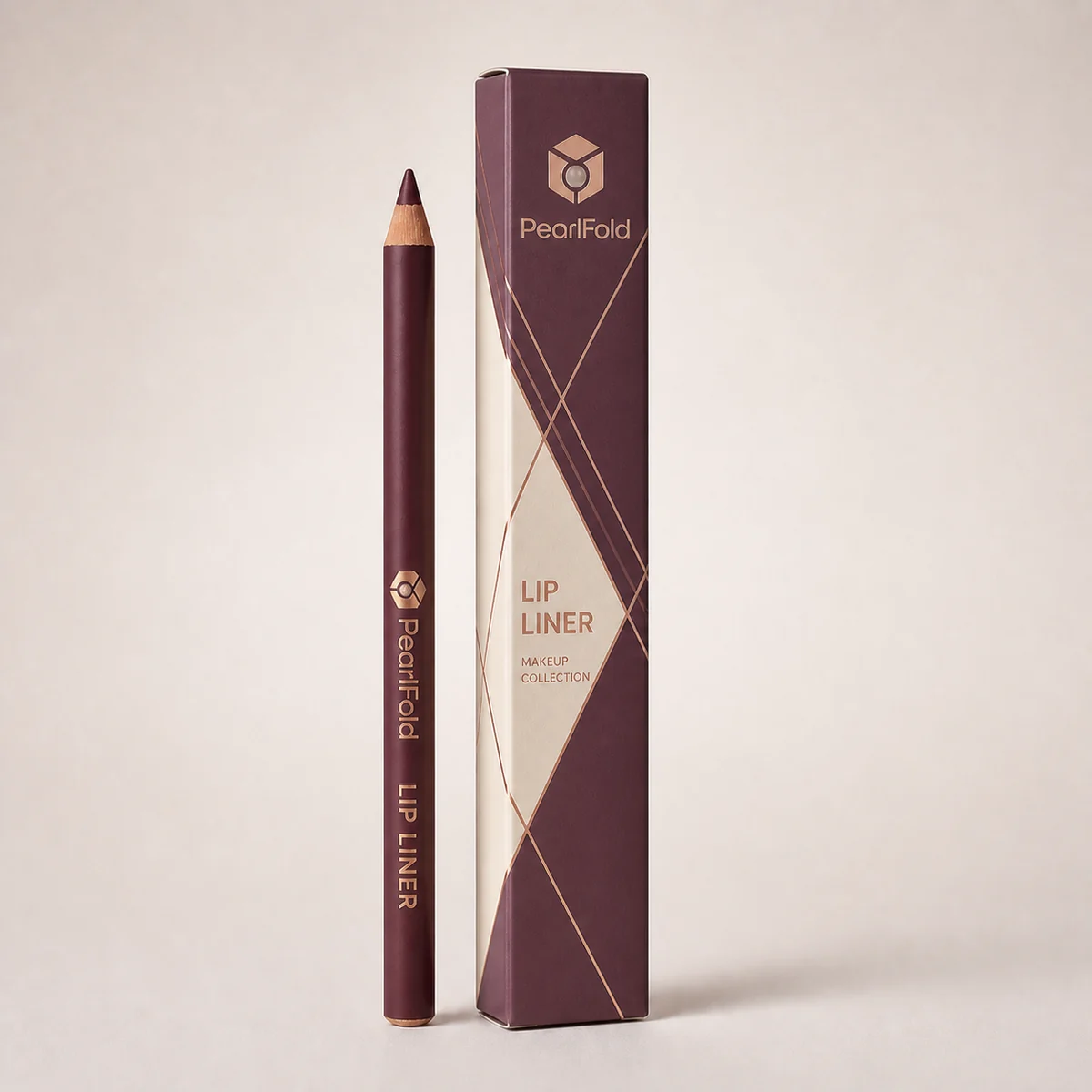
  • Custom Lip Gloss Boxes

    Custom Lip Gloss Boxes

    Custom Lip Gloss Boxes are custom cartons planned around the dimensions, protection needs, artwork, and retail presentation of a lip gloss product. Package gloss products in size-matched cartons with strong shelf presence. PearlFold uses the product brief and physical measurements to define an appropriate structure before a quote is finalized, so the package is based on the actual wand tube rather than a generic stock assumption.

    Reviewed August 2026: this page describes a custom-quote packaging service for U.S. beauty and personal-care brands. Final size, board, insert, finish, order quantity, production schedule, and delivery terms must be confirmed in the written quotation. PearlFold does not present one unverified specification as suitable for every brand or product.

    What are custom lip gloss boxes used for?

    Custom Lip Gloss Boxes give the wand tube a structured outer package for presentation, information, handling, and protection. A well-planned carton creates a clear surface for brand artwork and required product copy while helping the inner item stay organized through packing, storage, and retail display. The right solution may be a slim folding carton, but the final choice depends on the container profile, closure, weight, fragility, sales channel, and desired opening experience.

    The carton should support the product instead of competing with it. For a single retail unit, that usually means a clean silhouette, readable panel hierarchy, and controlled use of finishes. For a launch set, influencer kit, or premium assortment, the brief may call for more presentation space or a fitted insert. PearlFold evaluates those decisions as part of one packaging system so the structure, graphics, and unboxing sequence work together.

    How should a custom lip gloss box be sized?

    A custom lip gloss box should be sized from the finished product, not from a screen estimate. The quote brief should include the container’s height, width or diameter, depth, cap or closure profile, weight, and any parts that extend beyond the main body. If the product has a pump, dropper, wand, applicator, sleeve, or tamper feature, that detail can change the internal clearance and panel layout.

    PearlFold also considers how the product will enter and leave the carton. A snug fit can improve presentation, but a carton that is too tight may scuff the container or make packing difficult. Too much empty space can allow movement and make the package feel oversized. A prototype or production sample is the best way to confirm fit before a larger run. If an insert is needed, its opening, depth, finger access, and retention points should be evaluated with the actual product.

    Which box styles can work for lip gloss packaging?

    The appropriate structure depends on the product and the sales experience. Possible directions for this product family include folding cartons; tuck-end boxes; sleeves; window boxes. These are planning directions, not a promise that every style fits every container. A lightweight retail item may only need a folding carton, while a fragile glass component or coordinated set may justify an insert or a more presentation-led structure.

    • Straight or reverse tuck cartons: efficient retail structures when the container has a stable, compact profile.
    • Auto-bottom or reinforced folding cartons: worth evaluating when weight or packing speed calls for more base support.
    • Sleeves and trays: useful when the product should reveal in stages or when a coordinated inner tray improves presentation.
    • Fitted presentation boxes: suited to selected sets, gifting, PR mailers, or premium programs after cost and shipping impact are reviewed.

    What materials and finishes should a U.S. beauty brand consider?

    Material selection starts with structure, print surface, protection, and the brand’s documented requirements. Relevant directions may include paperboard; kraft; rigid board for sets. The final board grade and thickness should be selected after the dimensions, weight, and converting method are known. Sustainability language should only be used when the chosen material, supplier documentation, and disposal pathway support the exact claim.

    Finishes can guide attention without covering every panel. Matte or gloss coatings, spot treatments, embossing, debossing, foil details, and textured papers may be evaluated against the artwork and budget. Fine type, barcodes, ingredient copy, and regulatory information need enough contrast and quiet space. A finish that looks strong in a digital mockup should still be tested for rub resistance, fold cracking, legibility, and color behavior on the selected board.

    How should artwork be organized on Custom Lip Gloss Boxes?

    Artwork should follow the approved dieline and keep critical elements away from folds, glue areas, cut lines, and closure panels. The principal display panel normally carries the clearest brand and product identification. Secondary panels can organize directions, ingredient or legal copy supplied by the brand, quantity statements, barcodes, recycling guidance that can be substantiated, and other market-specific information.

    For U.S. distribution, the brand remains responsible for confirming the copy and labeling rules that apply to its product. PearlFold can organize the packaging production file around supplied content, but packaging design does not replace legal or regulatory review. Before release, check spelling, shade or variant names, barcode accuracy, color references, image resolution, overprint settings, and the relationship between every panel and the physical opening direction.

    Custom packaging or a stock carton: which is the better fit?

    Decision factor Custom Lip Gloss packaging Stock carton
    Fit Planned around the supplied product dimensions and closure profile Limited to available standard sizes
    Artwork Built around an approved dieline and brand panel hierarchy May rely on labels, sleeves, or restricted print areas
    Insert planning Can be evaluated with the actual container and presentation goal Usually requires a separate workaround
    Best use Retail launches, repeat product lines, sets, and brand-led presentation Early samples or situations where speed and existing size matter more than fit

    Custom packaging is worth considering when fit, shelf identity, panel space, or a controlled unboxing sequence affects the sale. A stock carton can still be practical for early testing. The useful comparison is not “custom is always better.” The decision should account for product readiness, artwork status, quantity, budget, schedule, shipping method, and the cost of poor fit.

    What information is needed for an accurate custom packaging quote?

    A clear brief reduces revisions and makes options easier to compare. Send the product dimensions, product weight, container photographs, desired quantity range, target delivery location, preferred structure, artwork status, finish direction, insert requirement, and target timing. If the product is still in development, identify which measurements are final and which may change.

    • Finished wand tube dimensions and closure details
    • Desired number of units and any planned product variants
    • Retail, e-commerce, subscription, gifting, or launch-kit use
    • Print files, color references, and required information panels
    • Protection, insert, assembly, packing, and shipping considerations

    PearlFold can then discuss a packaging direction and prepare a project-specific quotation. Related packaging pages that may help with range planning include Custom Lip Balm Boxes, Custom Lip Liner Boxes, and Custom Mascara Boxes. Each related product should still receive its own measurements and packaging brief.

    Frequently asked questions about Custom Lip Gloss Boxes

    Can the carton be matched to an existing product container?

    Yes, the design process can begin from an existing container’s finished dimensions and photographs. A physical sample or prototype is recommended when small tolerances, unusual closures, glass weight, or an insert affect fit. Final compatibility should be approved before the production quantity is released.

    Can one design system cover several shades or variants?

    A shared structure can often support a coordinated range when the containers use the same dimensions. Artwork files can then organize shade, scent, formula, or size differences through a controlled visual system. Each SKU and barcode should be checked separately before production.

    Are premium finishes required?

    No. Strong typography, color control, board selection, and accurate construction can create a premium result without applying every decorative process. Use a finish when it supports hierarchy, touch, durability, or brand recognition, and confirm its behavior on the chosen material.

    How do I start a custom lip gloss boxes project?

    Start with the product dimensions, quantity range, delivery location, artwork status, and a short description of the desired presentation. Use the Get a Custom Quote pathway to share those details. PearlFold can review the brief and identify the next structural, artwork, sampling, and quotation decisions.

  • Custom Lip Liner Boxes

    Custom Lip Liner Boxes

    Custom Lip Liner Boxes are custom cartons planned around the dimensions, protection needs, artwork, and retail presentation of a lip liner product. Use narrow cartons that protect pencils and keep shade variants organized. PearlFold uses the product brief and physical measurements to define an appropriate structure before a quote is finalized, so the package is based on the actual primary product container rather than a generic stock assumption.

    Reviewed August 2026: this page describes a custom-quote packaging service for U.S. beauty and personal-care brands. Final size, board, insert, finish, order quantity, production schedule, and delivery terms must be confirmed in the written quotation. PearlFold does not present one unverified specification as suitable for every brand or product.

    What are custom lip liner boxes used for?

    Custom Lip Liner Boxes give the primary product container a structured outer package for presentation, information, handling, and protection. A well-planned carton creates a clear surface for brand artwork and required product copy while helping the inner item stay organized through packing, storage, and retail display. The right solution may be a size-matched folding carton or presentation box, but the final choice depends on the container profile, closure, weight, fragility, sales channel, and desired opening experience.

    The carton should support the product instead of competing with it. For a single retail unit, that usually means a clean silhouette, readable panel hierarchy, and controlled use of finishes. For a launch set, influencer kit, or premium assortment, the brief may call for more presentation space or a fitted insert. PearlFold evaluates those decisions as part of one packaging system so the structure, graphics, and unboxing sequence work together.

    How should a custom lip liner box be sized?

    A custom lip liner box should be sized from the finished product, not from a screen estimate. The quote brief should include the container’s height, width or diameter, depth, cap or closure profile, weight, and any parts that extend beyond the main body. If the product has a pump, dropper, wand, applicator, sleeve, or tamper feature, that detail can change the internal clearance and panel layout.

    PearlFold also considers how the product will enter and leave the carton. A snug fit can improve presentation, but a carton that is too tight may scuff the container or make packing difficult. Too much empty space can allow movement and make the package feel oversized. A prototype or production sample is the best way to confirm fit before a larger run. If an insert is needed, its opening, depth, finger access, and retention points should be evaluated with the actual product.

    Which box styles can work for lip liner packaging?

    The appropriate structure depends on the product and the sales experience. Possible directions for this product family include folding cartons; tuck-end boxes; sleeves; window boxes. These are planning directions, not a promise that every style fits every container. A lightweight retail item may only need a folding carton, while a fragile glass component or coordinated set may justify an insert or a more presentation-led structure.

    • Straight or reverse tuck cartons: efficient retail structures when the container has a stable, compact profile.
    • Auto-bottom or reinforced folding cartons: worth evaluating when weight or packing speed calls for more base support.
    • Sleeves and trays: useful when the product should reveal in stages or when a coordinated inner tray improves presentation.
    • Fitted presentation boxes: suited to selected sets, gifting, PR mailers, or premium programs after cost and shipping impact are reviewed.

    What materials and finishes should a U.S. beauty brand consider?

    Material selection starts with structure, print surface, protection, and the brand’s documented requirements. Relevant directions may include paperboard; kraft; rigid board for sets. The final board grade and thickness should be selected after the dimensions, weight, and converting method are known. Sustainability language should only be used when the chosen material, supplier documentation, and disposal pathway support the exact claim.

    Finishes can guide attention without covering every panel. Matte or gloss coatings, spot treatments, embossing, debossing, foil details, and textured papers may be evaluated against the artwork and budget. Fine type, barcodes, ingredient copy, and regulatory information need enough contrast and quiet space. A finish that looks strong in a digital mockup should still be tested for rub resistance, fold cracking, legibility, and color behavior on the selected board.

    How should artwork be organized on Custom Lip Liner Boxes?

    Artwork should follow the approved dieline and keep critical elements away from folds, glue areas, cut lines, and closure panels. The principal display panel normally carries the clearest brand and product identification. Secondary panels can organize directions, ingredient or legal copy supplied by the brand, quantity statements, barcodes, recycling guidance that can be substantiated, and other market-specific information.

    For U.S. distribution, the brand remains responsible for confirming the copy and labeling rules that apply to its product. PearlFold can organize the packaging production file around supplied content, but packaging design does not replace legal or regulatory review. Before release, check spelling, shade or variant names, barcode accuracy, color references, image resolution, overprint settings, and the relationship between every panel and the physical opening direction.

    Custom packaging or a stock carton: which is the better fit?

    Decision factor Custom Lip Liner packaging Stock carton
    Fit Planned around the supplied product dimensions and closure profile Limited to available standard sizes
    Artwork Built around an approved dieline and brand panel hierarchy May rely on labels, sleeves, or restricted print areas
    Insert planning Can be evaluated with the actual container and presentation goal Usually requires a separate workaround
    Best use Retail launches, repeat product lines, sets, and brand-led presentation Early samples or situations where speed and existing size matter more than fit

    Custom packaging is worth considering when fit, shelf identity, panel space, or a controlled unboxing sequence affects the sale. A stock carton can still be practical for early testing. The useful comparison is not “custom is always better.” The decision should account for product readiness, artwork status, quantity, budget, schedule, shipping method, and the cost of poor fit.

    What information is needed for an accurate custom packaging quote?

    A clear brief reduces revisions and makes options easier to compare. Send the product dimensions, product weight, container photographs, desired quantity range, target delivery location, preferred structure, artwork status, finish direction, insert requirement, and target timing. If the product is still in development, identify which measurements are final and which may change.

    • Finished primary product container dimensions and closure details
    • Desired number of units and any planned product variants
    • Retail, e-commerce, subscription, gifting, or launch-kit use
    • Print files, color references, and required information panels
    • Protection, insert, assembly, packing, and shipping considerations

    PearlFold can then discuss a packaging direction and prepare a project-specific quotation. Related packaging pages that may help with range planning include Custom Mascara Boxes, Custom Eyeliner Boxes, and Custom Eyeshadow Boxes. Each related product should still receive its own measurements and packaging brief.

    Frequently asked questions about Custom Lip Liner Boxes

    Can the carton be matched to an existing product container?

    Yes, the design process can begin from an existing container’s finished dimensions and photographs. A physical sample or prototype is recommended when small tolerances, unusual closures, glass weight, or an insert affect fit. Final compatibility should be approved before the production quantity is released.

    Can one design system cover several shades or variants?

    A shared structure can often support a coordinated range when the containers use the same dimensions. Artwork files can then organize shade, scent, formula, or size differences through a controlled visual system. Each SKU and barcode should be checked separately before production.

    Are premium finishes required?

    No. Strong typography, color control, board selection, and accurate construction can create a premium result without applying every decorative process. Use a finish when it supports hierarchy, touch, durability, or brand recognition, and confirm its behavior on the chosen material.

    How do I start a custom lip liner boxes project?

    Start with the product dimensions, quantity range, delivery location, artwork status, and a short description of the desired presentation. Use the Get a Custom Quote pathway to share those details. PearlFold can review the brief and identify the next structural, artwork, sampling, and quotation decisions.